Insite or Insight: Don’t Confuse These Two Words
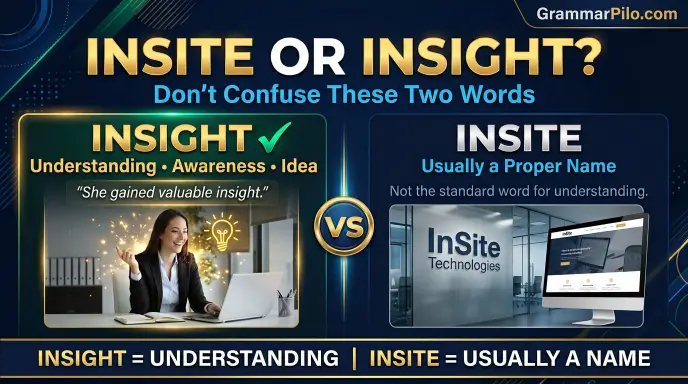
Insight is the correct word when you mean a deep understanding, useful idea, or clear perception, while insite is generally ...
Read more
Embed or Imbed: Which Spelling Is Correct in Modern English?
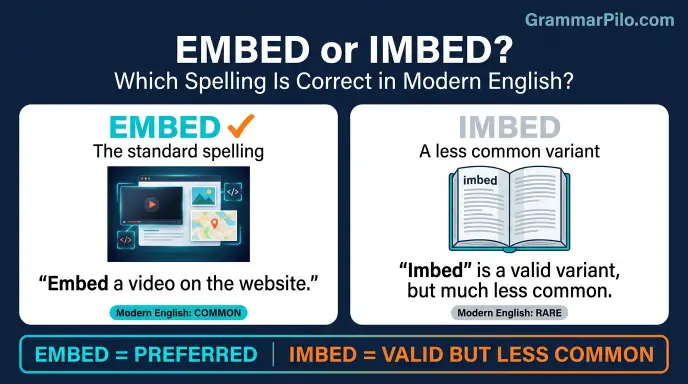
Embed is the preferred spelling in modern English, while imbed is also accepted but much less common. Both words mean ...
Read more
Master or Masters: The Simple Guide to Using Them Correctly
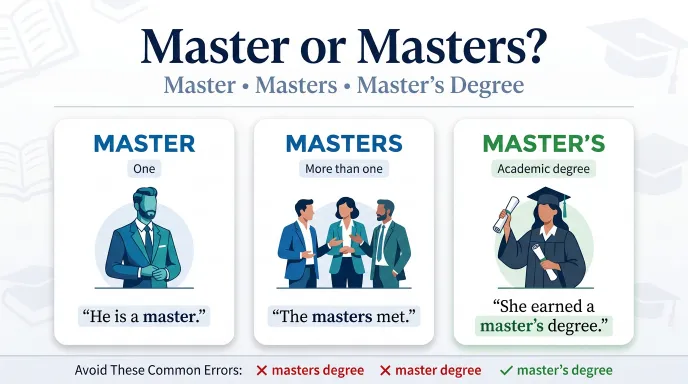
The correct choice between master or masters depends on what you mean. Master is the singular form, while masters can ...
Read more
Begun or Began: Which Is Correct? Meaning & Examples
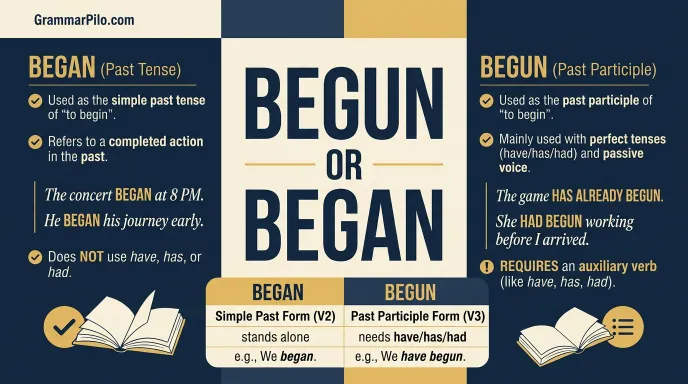
Began is the simple past form of begin, while begun is the past participle and normally needs a helping verb ...
Read more
Oriented or Orientated: Which Form Is Correct?
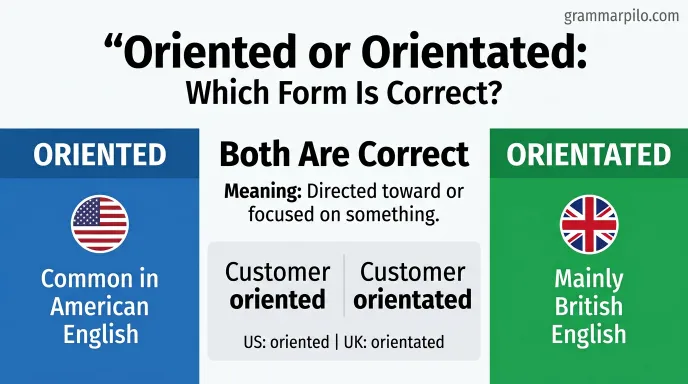
Oriented and orientated are both correct forms, but their regional preferences differ. Oriented is more common in American English, while ...
Read more
Sung or Sang: Which Form Should You Use?
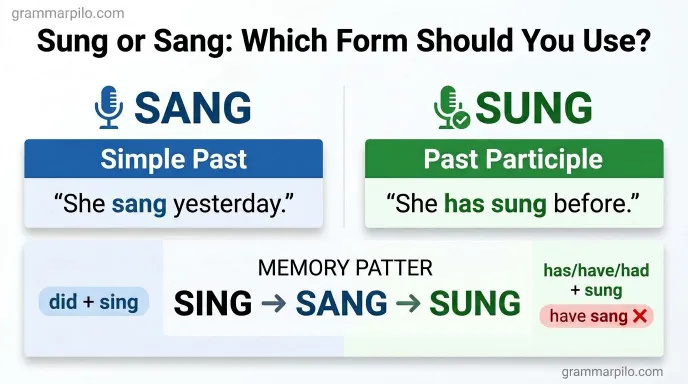
When you talk about singing in the past, should you write sung or sang? The answer depends on the grammar ...
Read more
Sewed or Sewn: Which Form of Sew Should You Use?
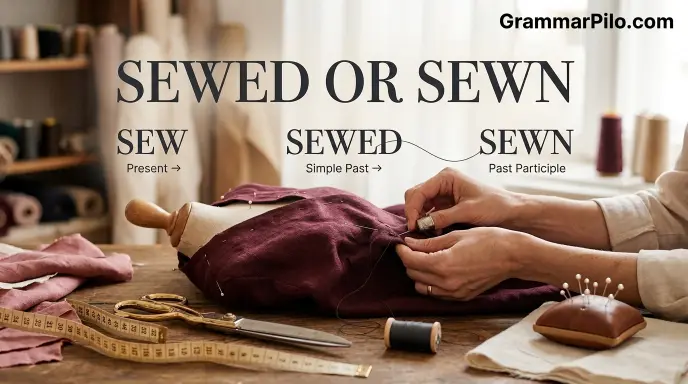
Sewed is the simple past form of sew, while sewn is a past participle commonly used with have, has, had, ...
Read more
Take or Pay: How These Two Words Work in Different Sentences
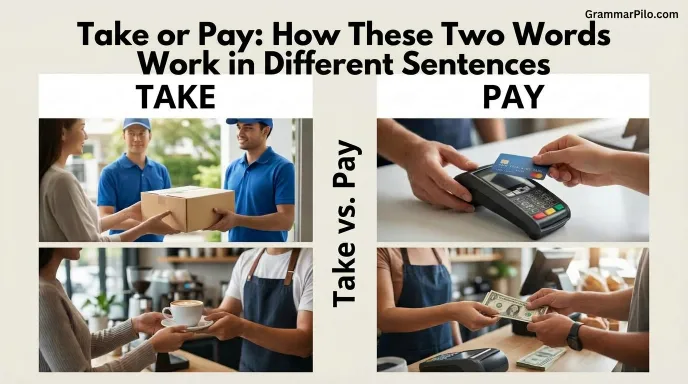
“Take” and “pay” are both correct English words, but they have different meanings and grammatical uses, so the right choice ...
Read more
Wrote or Written: The Simple Guide to Choosing the Right Form
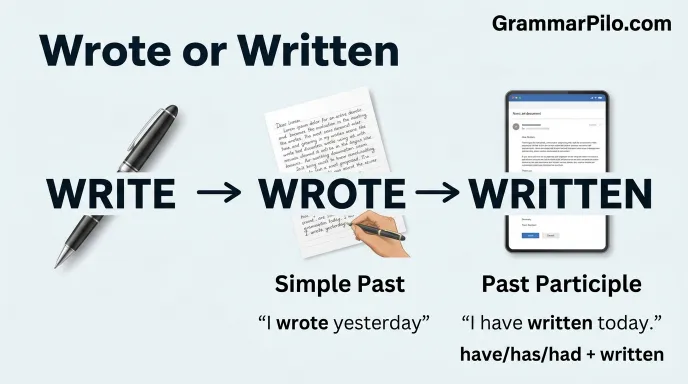
Wrote and written are both correct forms of the verb write, but they are used in different grammatical situations. Wrote ...
Read more
And vs Or: The Simple Rule for Choosing Between Them
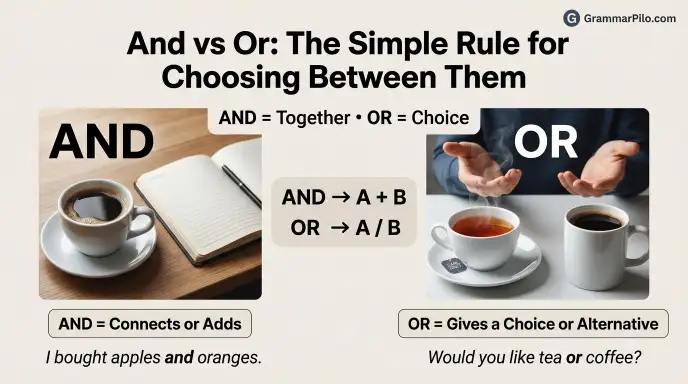
And connects things that are added together, while or presents alternatives or choices. The basic difference is simple: use and ...
Read more