Wrote or Written: The Simple Guide to Choosing the Right Form
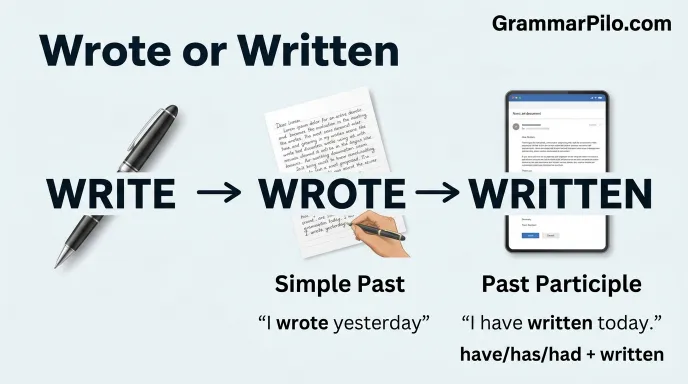
Wrote and written are both correct forms of the verb write, but they are used in different grammatical situations. Wrote ...
Read more
And vs Or: The Simple Rule for Choosing Between Them
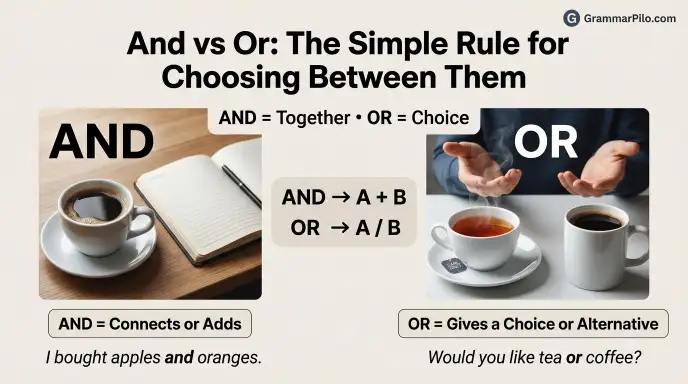
And connects things that are added together, while or presents alternatives or choices. The basic difference is simple: use and ...
Read more
Right or Wright: The Simple Difference Between These Two Words
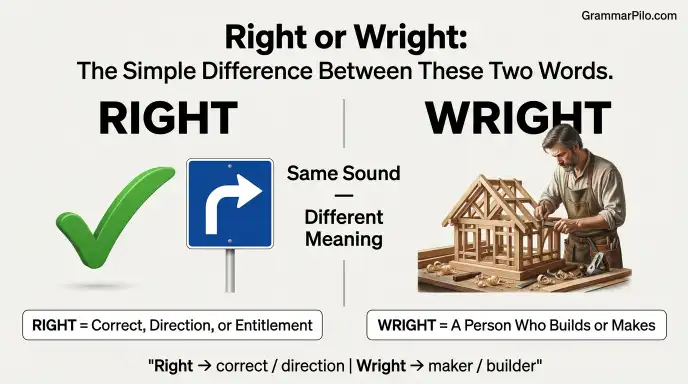
Right is the common English word used for correctness, direction, entitlement, or something proper, while wright is a much less ...
Read more
Themself or Theirself: Know the Difference Fast
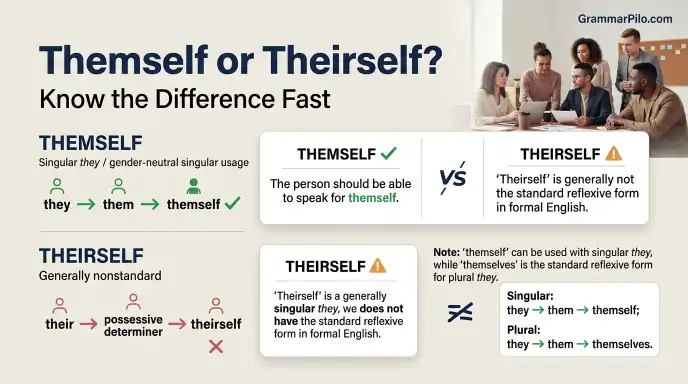
Themself is the preferred form when you need a singular reflexive pronoun for singular they, while theirself is a nonstandard ...
Read more
Hisself or Himself: Clear Up the Confusion Now

Himself is the correct standard English form, while hisself is a nonstandard or dialectal form of the same reflexive pronoun. ...
Read more
Theirselves or Themselves: Which Is Correct?
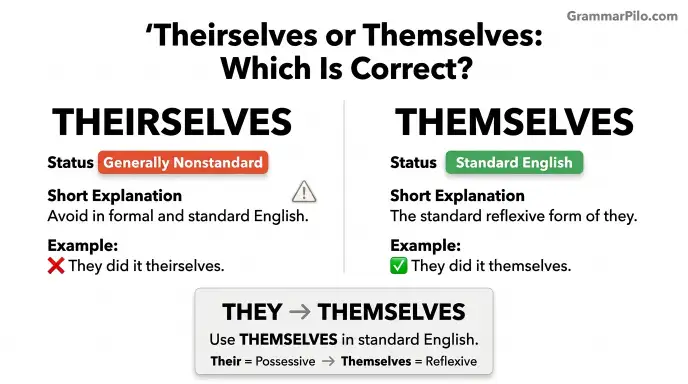
Are you confused about theirselves or themselves? The correct standard English form is themselves. The word theirselves is generally considered ...
Read more
Their or They’re: How to Use Them Correctly
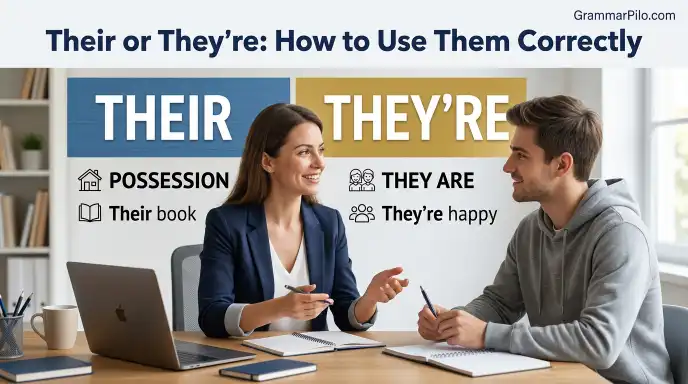
Their and they’re are both correct English words, but they have different meanings: “their” shows possession, while “they’re” is a ...
Read more
Might or May: What’s the Difference? (With Examples)

Might and may are both modal verbs used to talk about possibility, but “may” is often more formal, while “might” ...
Read more
Transitive or Intransitive: What’s the Difference?
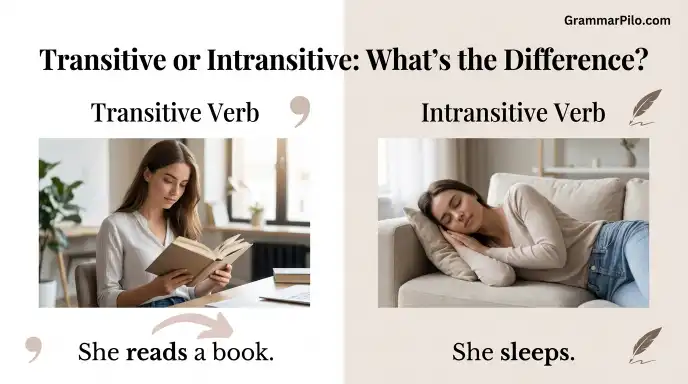
A transitive verb takes a direct object, while an intransitive verb does not need or take a direct object. This ...
Read more