Alla or Aya: The correct Spanish spelling is “allá” for “there,” while “aya” refers to a governess or caregiver.
Have you ever seen “alla” or “aya” and wondered which spelling is correct? This is a common question for Spanish learners because these short words can sound very similar in speech.
The confusion becomes even greater because Spanish has several words with similar sounds, including aya, haya, halla, and allá.
The key point is simple: allá and aya are both correct Spanish words, but they do not mean the same thing. The word allá is an adverb of place. It means “there,” “over there,” or a place that is some distance away.
The word aya is a feminine noun for a woman who was responsible for caring for and educating children.
This article explains the difference between alla or aya, shows the correct spelling, explains their origins, and gives simple examples. You will also learn why allá needs an accent mark and how to avoid common spelling mistakes.
Alla or Aya: Quick Answer
The correct spelling depends on what you want to say:
- allá = there, over there, or in a distant place
- aya = a woman who cared for and educated children
Examples
Allá está mi casa.
= My house is over there.
El niño estaba con su aya.
= The child was with his governess or nanny.
So, if you mean “there,” use allá. If you mean a woman who cared for children, use aya.
| Word | Meaning | Part of speech | Example |
| allá | there, over there | Adverb | Ve allá. |
| aya | female child caregiver/educator | Noun | La aya cuidaba al niño. |
Alla or Aya: Definition and Meaning
“Alla” and “Aya” are not the same Spanish word, and their meanings depend on the correct spelling and accent mark. This is why learners often confuse them when they hear them in conversation.
What Does “Allá” Mean?
Allá is a Spanish adverb that means “over there,” “there,” or “in that place.” It usually refers to a place that is away from the speaker.
The accent mark is important: allá is the correct spelling when you mean “over there.”
Examples:
- Mira allá. Look over there.
- Mi casa está allá. My house is over there.
- Vamos allá mañana. We are going there tomorrow.
- El restaurante está allá. The restaurant is over there.
In these examples, allá refers to a location or direction.
What Does “Aya” Mean?
Aya is a Spanish noun that traditionally means a woman employed to care for and supervise children, especially in a household. It is a much less common word in modern everyday Spanish.
Examples:
- El aya cuidaba a los niños. The nanny cared for the children.
- El aya acompañaba a los pequeños. The children’s governess accompanied the little ones.
Because aya is uncommon today, Spanish learners are more likely to encounter allá in everyday conversation.
Alla vs. Aya at a Glance
| Word | Meaning | Example |
|---|---|---|
| allá | over there; in that place | Mira allá. |
| aya | a woman who cares for children | El aya cuidaba a los niños. |
Why Does the Accent Mark Matter?
The accent in allá is not optional when the word means “over there.” Writing alla without the accent can change the appearance and correctness of the word.
For example:
- Mira allá. ✅
- Mira alla. ❌
So, if you want to talk about a place that is “over there,” use allá.
A Simple Way to Remember
Think of allá as a place word and aya as a person.
- Allá = over there 📍
- Aya = a childcare/governess role 👩🏫
This simple distinction can help you choose the correct word when writing in Spanish.
The Origin of Alla or Aya
The two words have different histories.
Origin of “allá”
The Spanish word allá has a long history. The RAE’s historical dictionary traces it to the Latin illāc, meaning roughly “to that place.” Historical forms include several older spellings, including ayá. Over time, modern Spanish settled on the spelling allá.
The accent is important because allá is stressed on its final syllable. It is written with ll and an accent on the final á.
Today, allá normally refers to a place that is relatively distant or not precisely identified. It can also refer to a remote time.
Origin of “aya”
Aya is a noun. It refers to a person whose job was to care for and educate children, especially in a traditional household. The word is feminine, and its plural is ayas.
Because aya and allá can sound similar in some varieties of Spanish, learners may confuse them when writing.
British English vs American English Spelling
This comparison does not apply directly to allá and aya.
These are Spanish words, so the difference is not like color vs colour or center vs centre. British English and American English do not use different spellings for these Spanish words.
Instead, the important distinction is between the Spanish words and their meanings.
| Form | Meaning | Correct? |
| allá | there / over there | Yes |
| aya | female child caregiver | Yes |
| alla | usually missing the accent when meaning “there” | No, use allá |
| ayá | nonstandard modern spelling for this meaning | No |
| haya | a different Spanish word | Yes |
| halla | a different Spanish word | Yes |
The RAE’s historical material records older forms related to allá, but modern standard Spanish uses allá for the adverb.
Which Spelling Should You Use?
Your choice depends on the meaning, not on whether you are writing for a US or UK audience.
Use “allá” when you mean “there”
Use allá when talking about a distant or less precise place.
Example:
El hotel está allá.
The hotel is over there.
It can also refer to a distant time:
Allá en mi juventud, viajaba mucho.
Back in my youth, I traveled a lot.
The Diccionario del Español de México also uses allá for distant places and for remote times.
Use “aya” for a female caregiver
Use aya when referring to a woman whose role is to care for and educate children.
Example:
La aya cuidaba a los niños.
The governess cared for the children.
This use is less common in everyday modern Spanish because it describes an old-fashioned occupation.
Common Mistakes with Alla or Aya
1. Writing “alla” instead of “allá”
When you mean “there,” the standard spelling is allá, with an accent.
❌ La casa está alla.
✅ La casa está allá.
2. Writing “ayá”
Ayá is not the standard modern spelling for the Spanish adverb meaning “there.” Use allá instead. Historical sources do record ayá as an older form, which helps explain why the spelling can appear in older material.
3. Confusing “aya” with “haya”
These are different words.
Aya = female caregiver or educator.
Haya = a form of the verb haber or the name of a type of tree, depending on context.
4. Confusing “aya” with “halla”
Halla comes from the verb hallar, meaning “to find.”
Halla la respuesta.
= Find the answer.
This is different from aya.
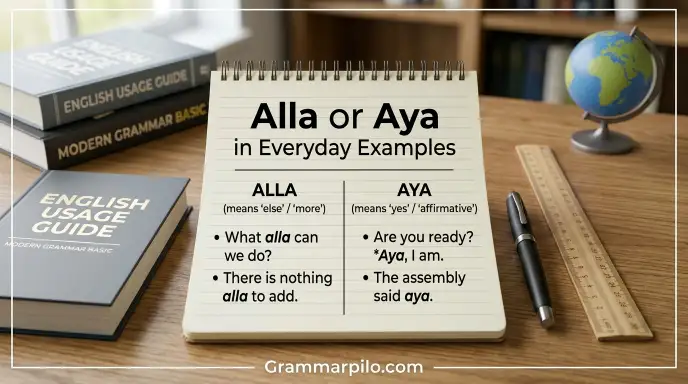
Alla or Aya in Everyday Examples
In emails
If you are giving someone directions:
La oficina está allá, junto a la entrada.
= The office is over there, next to the entrance.
If you are writing about a historical caregiver:
La novela presenta a una aya que cuida de los niños.
In news
A news report may use allá when describing a place:
Los residentes de allá esperan nuevas medidas.
The word can also appear in reports about distant regions or events.
On social media
You may see short expressions such as:
¡Allá vamos!
This means something like “Here we go!” or “There we go!”, depending on context.
Another common expression is:
Allá tú.
This can mean that the decision or responsibility is up to the other person.
In formal writing
In formal Spanish, use allá with its standard accent when it means “there.”
For example:
La información presentada allá debe revisarse con cuidado.
For historical writing, aya may appear when discussing a traditional household caregiver.
Alla or Aya: Comparison Table
| Feature | Allá | Aya |
| Language | Spanish | Spanish |
| Meaning | There / over there | Female caregiver or educator |
| Word type | Adverb | Noun |
| Accent | Yes: á | No |
| Spelling | allá | aya |
| Plural | — | ayas |
| Modern use | Common | Less common |
| Example | Está allá. | La aya cuidaba al niño. |
| Main confusion | Missing accent or confusing with aya | Confusing with allá, haya, or halla |
Alla or Aya: Google Trends & Usage Data
Search interest for these terms can be difficult to interpret because aya and allá are not used in the same way.
Allá is a normal Spanish adverb used across Spanish-speaking regions. The Diccionario del Español de México, for example, gives several everyday uses for the word, including distant places, movement, and remote times.
Aya, by contrast, refers to an older type of childcare role and is much less common in everyday modern Spanish. Dictionary sources describe it as a traditional or old-fashioned occupation.
This means that raw search volume for “alla or aya” should not be treated as evidence that the two words are equally common. Searchers may also type “alla or haya,” “aya or haya,” or “haya, halla, aya, allá” when trying to solve the wider spelling problem. Spanish educational sources commonly group these words together because their sounds create confusion.
FAQs About Alla or Aya
1. Is “alla” or “aya” correct?
Both can be correct, but they have different meanings. Allá means “there” or “over there,” while aya refers to a female caregiver or educator.
2. Should “alla” have an accent?
Yes, when you mean “there,” the standard spelling is allá with an accent on the final á.
3. What does “aya” mean in Spanish?
Aya is a feminine noun for a woman responsible for caring for and educating children, especially in a traditional household.
4. Is “ayá” correct in Spanish?
Not as the standard modern spelling of the adverb meaning “there.” The modern form is allá. Historical sources show that ayá appeared in older Spanish, but it is not the standard spelling today.
5. What is the difference between “aya” and “haya”?
Aya means a female caregiver. Haya can be a form of the verb haber or can refer to a beech tree, depending on the sentence.
6. What is the difference between “aya” and “halla”?
Aya is a noun meaning a female caregiver. Halla is a form of hallar, meaning “to find.”
7. What does “allá” mean in English?
Allá usually means “there,” “over there,” or a distant place. It can also refer to a distant time.
Conclusion
The difference between alla or aya is easy once you focus on meaning. If you want to say “there,” “over there,” or refer to a distant place, use allá with ll and an accent on the final á. If you are referring to a woman whose traditional role was to care for and educate children, use aya.
These words are not British or American spelling variants. They are separate Spanish words with different meanings and grammatical roles. Allá is an adverb and is common in everyday Spanish. Aya is a noun linked to an older childcare role and is less common in modern speech.
It is also useful to remember the related words haya and halla. They may sound similar, but they have different meanings and spellings. Learning the meaning of each word is the best way to avoid mistakes.
So, when writing Spanish, remember this simple rule: “there” = allá; female caregiver = aya. The accent in allá matters, and the extra ll helps distinguish it from aya.
Read More Articles:

I’m Sloane Mercer, a U.S.-based English language writer focused on grammar, spelling, vocabulary, and everyday English usage. Through GrammarPilo, I provide clear and practical explanations to help readers choose the right words and communicate with confidence.








1 thought on “Alla or Aya: Which Spelling Is Correct?”