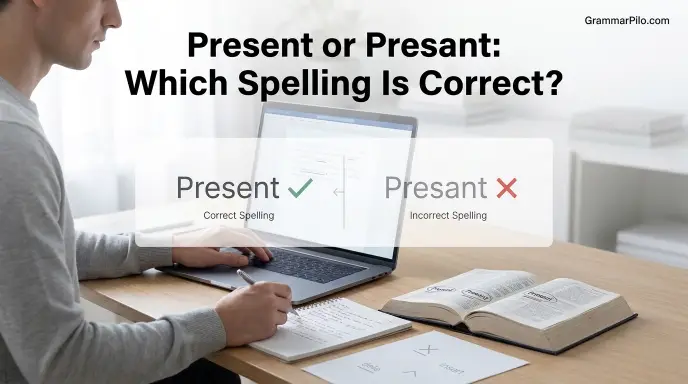
“Present” is the correct spelling, while “presant” is a common misspelling. If you are wondering if to write present or presant, always use present in standard English.
The confusion is common because the vowel sound in present can make the word easy to spell incorrectly. Some people write presant because it may seem to match the way the word sounds in certain accents. However, presant is not the standard spelling of the English word.
The word present has several meanings and can function as a noun, adjective, or verb. It can refer to something that exists now, a gift, or the act of giving or introducing something.
For example:
She gave me a birthday present.
I am present at the meeting.
She will present the results tomorrow.
Understanding present vs. presant is important for students, writers, professionals, and anyone who wants to avoid common English spelling mistakes.
Present or Presant: Quick Answer
Present is the correct spelling.
Presant is incorrect and is usually a misspelling of present.
| Spelling | Correct? | Meaning |
| Present | ✓ Yes | Existing now, a gift, or to give/show something |
| Presant | ✗ No | Common misspelling |
Correct Examples
- I received a birthday present.
- She is present at the meeting.
- The present situation is difficult.
- He will present his research tomorrow.
- We need to focus on the present.
Simple Rule
Remember:
Present = correct
Presant = incorrect
There is no standard English word presant with the meanings normally intended by people who use it.
Definition and Meaning of Present
The word present has several meanings, which makes it a particularly useful English word.
Present as an Adjective
As an adjective, present can mean existing or happening now.
The present situation requires attention.
We need to focus on the present problem.
It can also describe someone who is in a particular place:
All the students were present.
Here, present means that the students were there.
Present as a Noun
As a noun, present can mean a gift.
She bought me a birthday present.
It can also refer to the current time:
We should focus on the present.
Present as a Verb
As a verb, present can mean to give, show, introduce, or formally communicate something.
She will present the report tomorrow.
The manager presented the results to the team.
He presented his idea to the committee.
Presant or Present: What Is the Difference?
There is no difference in meaning because presant is not the standard spelling of this English word.
The correct comparison is:
- Present = correct
- Presant = incorrect
For example:
She gave a wonderful present.
Correct.
She gave a wonderful presant.
Incorrect.
If you see presant in an email, article, assignment, or social media post, it is generally a spelling error and should be changed to present.
Why Is “Presant” Incorrect?
The most likely reason people write presant is pronunciation.
The first vowel in present can sound different depending on the word’s pronunciation and context. This can make it tempting to spell the word with an a.
However, pronunciation does not change the standard spelling.
The correct spelling is always:
present
not:
presant
This is a good example of why English spelling cannot always be predicted perfectly from pronunciation.
The Origin of Present
The word present has a long history in English and comes through Old French from Latin.
The Latin word praesens meant “being at hand,” “being there,” or “present.” It comes from the Latin verb praeesse, meaning “to be before” or “to be in front.”
The meaning developed into several related English uses.
The idea of something being present is connected with something being “at hand” or existing now.
The noun meaning a gift developed from the idea of something being offered or given.
This explains why modern English uses present in several different ways.
Present Has Several Related Uses
Consider these examples:
He is present in the room.
We live in the present.
She bought a present for her friend.
He will present his findings.
Although these meanings look different, they all developed within the history of the word present.
British English vs. American English Spelling
There is no British vs. American spelling difference between present and presant.
Both British and American English use:
Present ✓
Both consider:
Presant ✗
a misspelling.
| English Variety | Correct | Incorrect |
| American English | present | presant |
| British English | present | presant |
| Canadian English | present | presant |
| Australian English | present | presant |
Unlike words such as center/centre or organize/organise, the spelling of present does not change between British and American English.
Which Spelling Should You Use?
Always use present.
In American English
The students were present in class.
In British English
The students were present in class.
The spelling is identical.
In Academic Writing
The researcher will present the findings tomorrow.
In Professional Writing
Thank you for being present at today’s meeting.
When Talking About a Gift
I bought her a birthday present.
In every case, the correct spelling is present.
Present in Everyday Examples
The word present appears frequently in everyday English.
At School
All students must be present for the exam.
The teacher will present the lesson.
At Work
She will present the report at the meeting.
Everyone who was present signed the document.
In an Email
I am writing to present the latest information.
Thank you for your present contribution to the project.
In Conversation
What did you get for your birthday present?
I want to focus on the present.
In News Writing
The minister presented the new policy yesterday.
In Formal Writing
The report presents several possible solutions.
Common Mistakes With Present or Presant
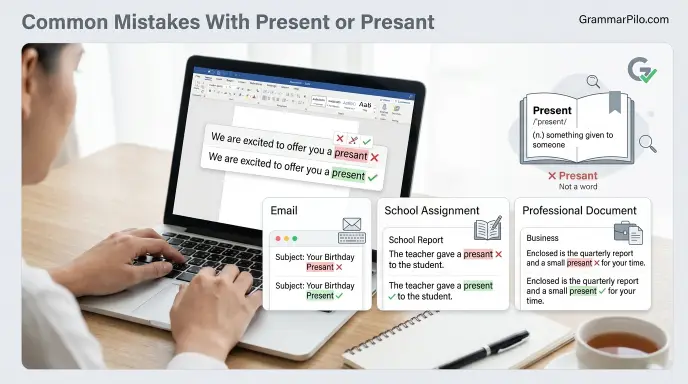
Mistake 1: Writing “Presant”
Incorrect:
I bought her a presant.
Correct:
I bought her a present.
The standard spelling contains “e”, not “a”, in the relevant position.
Mistake 2: Assuming Pronunciation Determines Spelling
English pronunciation can vary, but that does not mean the spelling should change.
Incorrect:
presant
Correct:
present
When you hear the word, remember its standard written form rather than spelling it exactly as it sounds.
Mistake 3: Confusing Present With Past
Present can refer to the current time:
I live in the present.
But present can also be a verb:
She will present the report.
The meaning depends on the sentence.
Mistake 4: Confusing “Present” With “Presence”
These words are related but different.
Present can mean existing or being there:
She was present at the meeting.
Presence is the noun referring to the state of being present:
Her presence was important.
Do not use them interchangeably.
Presant vs. Present: Side-by-Side Comparison
| Feature | Present | Presant |
| Correct spelling | ✓ Yes | ✗ No |
| Standard English word | Yes | No |
| Can be a noun | Yes | No |
| Can be an adjective | Yes | No |
| Can be a verb | Yes | No |
| Means a gift | Yes | No |
| Means existing now | Yes | No |
| Used in British English | Yes | No |
| Used in American English | Yes | No |
Present: Different Meanings and Uses
One reason present is important to understand is that it can have different meanings depending on context.
1. Existing Now
The present situation is unusual.
2. Being in a Place
Everyone was present at the meeting.
3. A Gift
She gave me a birthday present.
4. To Give or Show
He will present the information tomorrow.
5. The Current Time
We should focus on the present.
This makes present a versatile English word with several common grammatical uses.
How to Remember the Correct Spelling
The easiest way to remember present is to associate it with other words that contain present:
presentation
presenter
presented
presenting
All of these words keep the e in present.
For example:
present → presentation
present → presenter
If you remember present, you can also recognize the correct spelling in these related words.
Memory Trick
Think:
Present has “sent” at the end.
pre + sent = present
This can help you avoid writing presant.
Google Trends & Usage Data
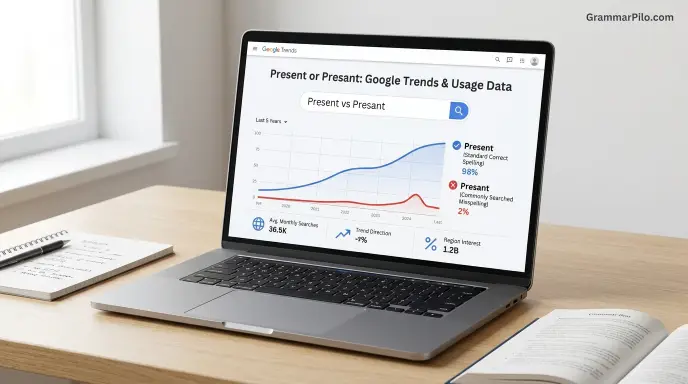
Searches for “present or presant” are related to a common spelling confusion. The incorrect form presant may appear in searches because people often search for a word while trying to confirm its spelling.
Google Trends measures relative search interest, not the total number of times a word is used. Search interest can change based on location, education, time period, and search behavior.
For standard English writing, the important distinction is clear: present is the accepted spelling, while presant is a misspelling.
Because this is primarily a spelling question, writers should focus on learning the standard spelling rather than treating the two forms as alternative spellings.
Present or Presant: Quick Comparison
| Question | Answer |
| Which spelling is correct? | Present |
| Is presant correct? | No |
| What can present mean? | Existing now, a gift, or to give/show something |
| Is present a noun? | Yes |
| Is present an adjective? | Yes |
| Is present a verb? | Yes |
| Is presant a standard word? | No |
| Is the spelling different in British English? | No |
| Is the spelling different in American English? | No |
Frequently Asked Questions
Is it present or presant?
Present is the correct spelling. Presant is a common misspelling.
Is “presant” a real English word?
No. Presant is not the standard spelling of the English word present.
How do you spell present correctly?
The correct spelling is:
Present
It is spelled with e, not a, in the commonly confused position.
Why do people spell present as presant?
The mistake can happen because of pronunciation. Depending on accent and context, the vowel sound may make presant seem like a logical spelling. However, the standard written form is present.
What does present mean?
Present has several meanings. It can mean existing now, being in a particular place, a gift, or the act of giving or showing something.
Is present the same in British and American English?
Yes. Present is spelled the same in both British and American English.
What is the noun form of present?
Present can itself be a noun. It can mean a gift:
She gave me a birthday present.
It can also refer to the current time:
We should live in the present.
What is the verb form of present?
Present is also a verb meaning to give, show, introduce, or formally communicate something.
He will present his research tomorrow.
Conclusion
Present is the correct spelling, while presant is incorrect. If you are choosing between present or presant, always use present in standard English.
The word present has several meanings. It can describe something happening now, someone who is in a particular place, a gift, or the act of giving or showing information.
The spelling does not change between British and American English. Both varieties use present.
The confusion usually comes from pronunciation, but English spelling is not always a direct reflection of how a word sounds. A useful memory trick is to connect present with related words such as presentation, presenter, and presented.
Remember the simple rule:
Present = correct
Presant = incorrect
So, if you are writing an email, school assignment, article, report, or social media post, choose present every time.
Some More Related Articles
- Waiter or Waitor: Which Spelling Is Correct?
- Explaination or Explanation: Which Spelling Is Correct?
- Customer or Costumer: Which Spelling Is Correct?

I’m Claire Morgan, the author behind Grammarpilo.com, where I write about English grammar, sentence structure, punctuation, and everyday language. My goal is to make grammar simple, clear, and practical, helping readers understand the rules and apply them with confidence in real-world writing.





1 thought on “Present or Presant: Which Spelling Is Correct?”