
Portugal and Spain are two beautiful European countries with rich histories, stunning coastlines, delicious food, and vibrant cultures, but Spain offers greater geographical variety and larger cities, while Portugal is often appreciated for its relaxed atmosphere, scenic coastline, and compact travel routes.
Choosing Portugal or Spain depends on your travel interests, budget, preferred lifestyle, and the experiences you want from your visit.
Spain is famous for destinations such as Barcelona, Madrid, Seville, and Granada. It attracts visitors with its architectural landmarks, lively festivals, Mediterranean beaches, and diverse regional traditions. Portugal, meanwhile, is known for Lisbon, Porto, the Algarve, historic villages, Atlantic beaches, and its distinctive maritime heritage.
Both countries offer excellent food, beautiful landscapes, and memorable cultural experiences. However, they differ in language, transportation, climate, travel costs, nightlife, and everyday lifestyle.
In this guide, you will discover the major differences between Portugal and Spain, compare their attractions, food, weather, living costs, safety, and culture, and explore which destination may be better for different types of travelers.
Quick Answer: Spain or Portugal?
Spain is generally better for travelers seeking large cities, extensive nightlife, diverse regional cultures, and a wide range of attractions. Portugal may be better for visitors who prefer a smaller country, picturesque coastal towns, historic neighborhoods, and a more relaxed travel experience.
Here is a quick comparison:
- Portugal: Known for Lisbon, Porto, the Algarve, Atlantic beaches, historic architecture, and traditional seafood.
- Spain: Famous for Madrid, Barcelona, Seville, Granada, Mediterranean beaches, festivals, and regional cuisine.
- Best for city variety: Spain.
- Best for a compact coastal trip: Portugal.
- Best for architectural diversity: Both countries offer remarkable architecture, with different regional styles.
- Best for nightlife variety: Spain has a broader range of major nightlife destinations.
- Best for surfing: Portugal is particularly well known for its Atlantic surf locations.
- Best for a first European trip: Both are excellent, depending on your preferred experiences.
Neither country is universally better. Your ideal choice depends on the kind of holiday you want.
What Is Portugal Like?
Portugal is a country in southwestern Europe known for its Atlantic coastline, historic cities, maritime heritage, traditional cuisine, and welcoming atmosphere.
It shares a land border with Spain and has a long coastline facing the Atlantic Ocean. Portugal is smaller than Spain in both geographical size and population, making it possible to explore several major destinations without covering extremely long distances.
Popular Places to Visit in Portugal
Portugal offers a combination of historic cities, coastal destinations, countryside landscapes, and traditional villages.
1. Lisbon
Lisbon is Portugal’s capital and one of its most popular tourist destinations. It is known for colorful streets, historic trams, viewpoints, traditional neighborhoods, and riverside attractions.
Popular experiences include exploring Alfama, visiting Belém Tower, and enjoying views from the city’s hills.
2. Porto
Porto is famous for its historic riverside district, traditional architecture, bridges, and port wine heritage. The Douro River adds to the city’s scenic appeal.
3. Algarve
The Algarve is a popular southern coastal region with golden beaches, dramatic cliffs, clear waters, and seaside towns. It is particularly attractive during the warmer months.
4. Sintra
Sintra is known for its romantic palaces, gardens, and wooded hills. Pena Palace is one of its most recognizable landmarks.
5. Madeira
Madeira is an Atlantic island region belonging to Portugal. It attracts visitors with its mountain scenery, coastal viewpoints, walking trails, and mild climate.
What Makes Portugal Special?
Portugal offers several experiences that make it stand out.
- Beautiful Atlantic beaches and coastal scenery.
- Historic neighborhoods and traditional architecture.
- A strong seafood culture.
- Famous port wine and regional food.
- Scenic train journeys and countryside destinations.
- A distinctive maritime history.
Portugal is particularly appealing to travelers who want to combine city exploration with coastal relaxation.
What Is Spain Like?
Spain is a large and culturally diverse country in southwestern Europe, famous for its historic cities, Mediterranean beaches, architecture, festivals, cuisine, and regional traditions.
Spain shares land borders with Portugal and France and has coastlines along both the Mediterranean Sea and the Atlantic Ocean. Its larger geographical area provides a wide variety of landscapes, climates, and travel experiences.
Popular Places to Visit in Spain
Spain has many internationally recognized destinations, each offering a different atmosphere.
1. Barcelona
Barcelona is known for its distinctive architecture, Mediterranean coastline, lively neighborhoods, and cultural attractions. The Sagrada Família and Park Güell are among its most famous landmarks.
2. Madrid
Madrid is Spain’s capital and a major center for art, shopping, nightlife, and Spanish culture. Visitors can explore the Prado Museum, Royal Palace, and historic city center.
3. Seville
Seville is famous for its traditional Andalusian architecture, flamenco heritage, orange trees, and lively festivals.
4. Granada
Granada is home to the Alhambra, a remarkable palace and fortress complex that reflects the region’s rich Islamic and Spanish history.
5. Valencia
Valencia combines historic neighborhoods with modern architecture, sandy beaches, and a strong food culture. It is also closely associated with paella.
What Makes Spain Special?
Spain offers a wide range of experiences.
- Historic cities and internationally recognized architecture.
- Mediterranean and Atlantic beaches.
- Famous festivals and cultural celebrations.
- Diverse regional food traditions.
- Active nightlife and entertainment.
- Mountains, islands, countryside, and coastal landscapes.
Spain is especially attractive to visitors who want variety and enjoy exploring several different regions during one trip.
Portugal vs. Spain: Geography and Location
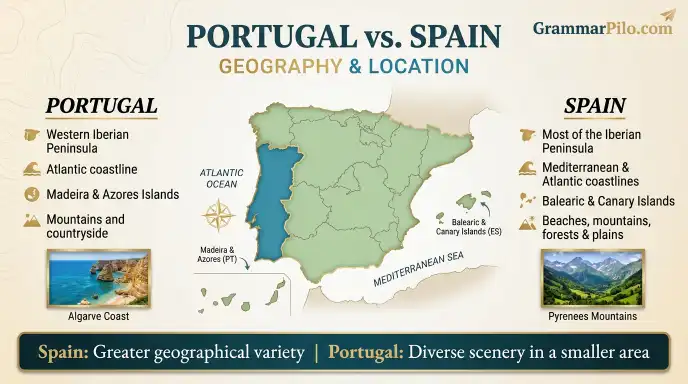
Portugal and Spain occupy the Iberian Peninsula in southwestern Europe. They share a land border, but their geographical sizes and coastlines create different travel opportunities.
Portugal’s Geography
Portugal occupies the western part of the Iberian Peninsula. Its mainland coastline faces the Atlantic Ocean, while Madeira and the Azores are autonomous island regions.
The country’s relatively compact size makes it possible to combine Lisbon, Porto, and the Algarve in one extended trip.
Spain’s Geography
Spain occupies most of the Iberian Peninsula and also includes the Balearic Islands in the Mediterranean and the Canary Islands in the Atlantic.
Its larger territory includes beaches, mountains, forests, islands, plains, and historic inland cities.
Which Country Has More Geographical Variety?
Spain offers greater overall geographical variety because of its larger area and different regional landscapes. Portugal, however, provides an impressive range of Atlantic coastal scenery, mountains, islands, and countryside destinations within a smaller country.
Spain vs. Portugal: Culture and Lifestyle
Both countries have strong cultural identities shaped by centuries of history, religion, trade, art, and regional traditions.
Portuguese Culture and Lifestyle
Portuguese culture is closely associated with maritime exploration, traditional music, regional cuisine, and historic architecture.
Fado is one of Portugal’s best known musical traditions. It is often characterized by expressive singing and emotional themes.
Portuguese cities also have a distinctive atmosphere, with tiled buildings, historic streets, outdoor cafés, and scenic public spaces.
Spanish Culture and Lifestyle
Spanish culture is highly diverse, with distinct regional identities and traditions.
Flamenco is strongly associated with Andalusia, while Catalonia, the Basque Country, Galicia, and other regions have their own languages, customs, and cultural histories.
Spain is also known for lively festivals, late night social activities, outdoor dining, and a strong café culture.
Which Country Has a More Relaxed Lifestyle?
Both countries offer relaxed lifestyles, especially outside their busiest urban centers. Portugal is often associated with a quieter coastal atmosphere, while Spain has a broader mix of relaxed seaside communities and energetic metropolitan areas.
The experience depends more on the specific city or region than on the country alone.
Portugal vs. Spain: Food and Cuisine
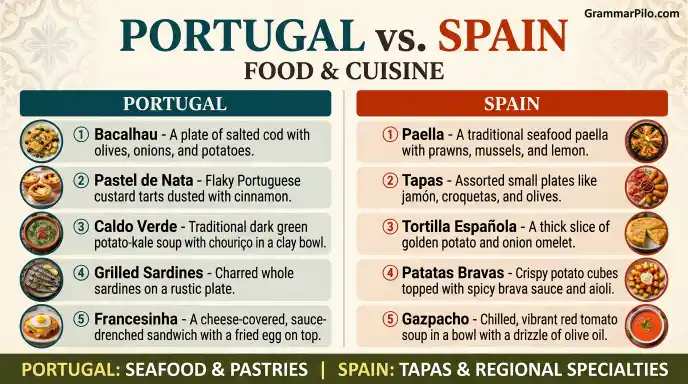
Food is one of the most enjoyable parts of visiting either country. Both Portugal and Spain have distinctive culinary traditions influenced by local ingredients, regional history, and coastal geography.
Traditional Portuguese Food
Portuguese cuisine is particularly known for seafood, grilled fish, soups, pastries, and hearty regional dishes.
Popular Portuguese foods include:
- Bacalhau: Salted cod prepared in many different ways.
- Pastel de Nata: A famous custard tart with a crisp pastry shell.
- Caldo Verde: A traditional soup made with potatoes, leafy greens, and often sausage.
- Sardinhas Assadas: Grilled sardines, especially popular during summer celebrations.
- Francesinha: A rich sandwich associated with Porto.
Portuguese food often highlights simple ingredients, seafood, olive oil, and traditional cooking methods.
Traditional Spanish Food
Spanish cuisine is diverse, with different specialties across its regions.
Popular Spanish foods include:
- Paella: A rice dish traditionally associated with Valencia.
- Tapas: Small dishes served in bars and restaurants.
- Tortilla Española: A Spanish potato and egg omelet.
- Patatas Bravas: Fried potatoes served with a flavorful sauce.
- Gazpacho: A chilled vegetable soup associated with Andalusia.
- Jamón Ibérico: A highly regarded cured ham.
Spanish cuisine offers a wide range of regional dishes, from seafood and rice to meat, vegetables, and traditional pastries.
Which Country Has Better Food?
There is no objective winner. Portugal may appeal more to people who love seafood, grilled fish, and custard pastries. Spain offers a particularly broad selection of regional dishes, tapas, rice specialties, and traditional cured meats.
Both countries are excellent destinations for food lovers.
Portugal vs. Spain: Beaches and Natural Beauty
Both countries have beautiful coastlines, but their beach experiences can differ because of their geography and surrounding waters.
Beaches in Portugal
Portugal’s Atlantic coastline is famous for dramatic cliffs, sandy beaches, surf destinations, and picturesque coastal villages.
Popular beach destinations include:
- Praia da Marinha.
- Lagos.
- Nazaré.
- Cascais.
- Ericeira.
- Costa da Caparica.
The Atlantic can be cooler and more powerful than the Mediterranean, making many Portuguese coastal locations particularly attractive to surfers.
Beaches in Spain
Spain has both Mediterranean and Atlantic beaches, offering different water conditions and landscapes.
Popular coastal destinations include:
- Costa Brava.
- Costa del Sol.
- Alicante.
- Valencia.
- Mallorca.
- Ibiza.
The Mediterranean coastline is particularly popular for swimming, beach resorts, and summer holidays.
Which Country Has Better Beaches?
Portugal is an excellent choice for dramatic Atlantic scenery and surfing. Spain offers a wider range of beach environments, including Mediterranean resorts, island beaches, and Atlantic coastal destinations.
The better option depends on if you prefer surfing, swimming, coastal scenery, or resort style holidays.
Portugal vs. Spain: Weather and Climate
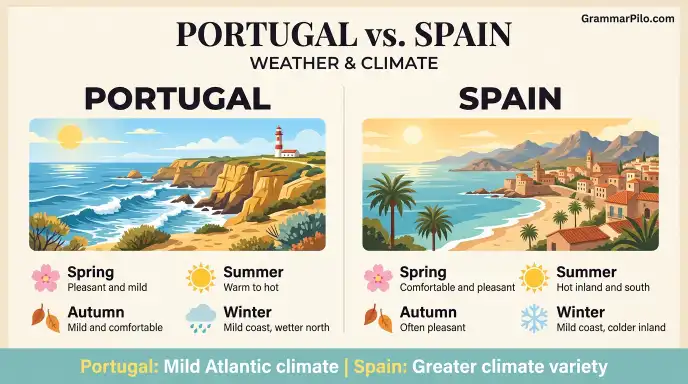
Portugal and Spain both experience Mediterranean and Atlantic climate influences, but weather varies significantly by region and season.
Weather in Portugal
Portugal generally has mild winters and warm to hot summers, although conditions differ between the north, south, and islands.
- Spring: Pleasant temperatures and good conditions for city sightseeing.
- Summer: Warm or hot weather, especially in the interior and Algarve.
- Autumn: Often mild, with comfortable travel conditions.
- Winter: Generally mild along the coast, with cooler and wetter conditions in the north.
The Algarve is particularly popular for sunny holidays, while northern Portugal tends to receive more rainfall.
Weather in Spain
Spain has several climate zones, ranging from Mediterranean coastal weather to continental conditions inland and oceanic conditions in the north.
- Spring: Comfortable for exploring cities and historic sites.
- Summer: Hot in many inland and southern regions.
- Autumn: Often pleasant, especially in coastal areas.
- Winter: Mild in some coastal regions but cold in parts of the interior and mountains.
Madrid can experience hot summers and cold winters, while northern coastal areas are generally cooler and wetter.
Which Country Has Better Weather?
Portugal may appeal to travelers seeking a relatively mild Atlantic coastal climate. Spain offers greater climatic variety, including warm Mediterranean islands, hot southern regions, and cooler northern landscapes.
For a beach holiday, the best choice depends on the month and specific destination.
Portugal vs. Spain: Cost of Living and Travel Expenses
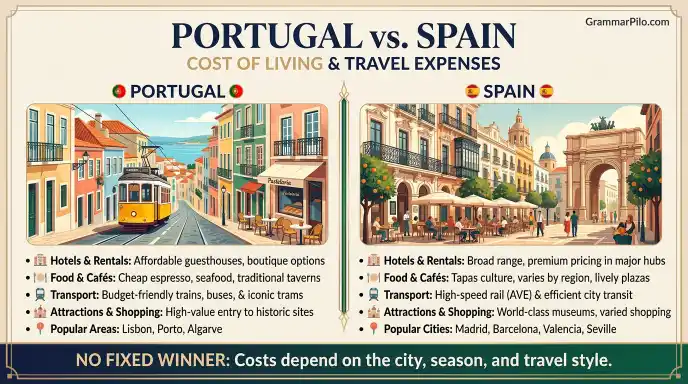
Portugal and Spain are both popular European destinations, but costs vary considerably depending on the city, season, accommodation, and lifestyle.
Is Portugal Cheaper Than Spain?
Portugal has historically been considered an affordable destination compared with several major Western European countries. However, popular areas such as Lisbon, Porto, and the Algarve can be expensive, particularly for accommodation.
Travel costs may include:
- Hotels and holiday rentals.
- Restaurants and cafés.
- Public transportation.
- Car rentals.
- Tourist attractions.
- Entertainment and shopping.
Is Spain Cheaper Than Portugal?
Spain offers a broad range of prices. Madrid and Barcelona can be expensive, while smaller cities and less touristy regions may offer more affordable accommodation and everyday expenses.
Cities such as Valencia, Granada, and Seville can provide different price experiences from Spain’s busiest tourist centers.
Which Country Is More Affordable?
Neither country is consistently cheaper in every category. Portugal may be less expensive in some destinations, while certain Spanish cities and regions can offer better value.
For an accurate comparison, consider the exact cities and travel dates rather than relying on countrywide averages.
Portugal vs. Spain: Language
Portugal and Spain have different national languages, although both countries contain regional languages and multilingual communities.
Portuguese Language
Portuguese is the official language of Portugal. It is also spoken in Brazil and several other countries.
Portuguese developed from Latin and has its own pronunciation, vocabulary, and grammatical structures.
Examples:
- Olá: Hello.
- Obrigado/Obrigada: Thank you.
- Por favor: Please.
- Bom dia: Good morning.
Spanish Language
Spanish, also called Castilian, is the official language throughout Spain, alongside co official regional languages in certain autonomous communities.
Examples:
- Hola: Hello.
- Gracias: Thank you.
- Por favor: Please.
- Buenos días: Good morning.
Are Portuguese and Spanish Similar?
Yes. Portuguese and Spanish are both Romance languages that developed from Latin. They share many vocabulary similarities and grammatical features, but their pronunciation and everyday expressions differ.
A person who speaks one language may recognize some words in the other, but understanding a conversation is not always easy.
Which Language Is Easier to Learn?
The answer depends on your first language and learning experience. English speakers may find certain vocabulary patterns familiar in both languages. Spanish pronunciation is often considered more predictable for beginners, while Portuguese has some pronunciation features that can take additional practice.
Portugal vs. Spain: Safety and Quality of Life
Both countries are popular with international travelers and offer established tourism infrastructure. However, safety can vary by city, neighborhood, and individual circumstances.
Is Portugal Safe?
Portugal is generally regarded as a safe destination for tourists. Visitors should still take normal precautions, especially in crowded tourist areas.
Common concerns include:
- Pickpocketing.
- Bag theft.
- Tourist targeted scams.
- Road safety.
- Beach and ocean conditions.
Is Spain Safe?
Spain is also a popular tourist destination with extensive public transportation and visitor services.
Travelers should remain alert in crowded places, particularly in busy areas of Barcelona, Madrid, and other major tourist destinations.
Common concerns include:
- Pickpocketing.
- Bag theft.
- Tourist scams.
- Crowded public transport.
- Nightlife related safety issues.
Which Country Has Better Quality of Life?
Both Portugal and Spain offer attractive lifestyles, but the experience depends on income, employment, housing, healthcare access, location, and personal preferences.
Portugal may appeal to people who prefer a smaller country atmosphere and coastal living. Spain may suit those who want larger cities, more regional variety, and a wider range of urban environments.
Portugal vs. Spain: Nightlife and Entertainment
Nightlife is another area where the two countries offer different experiences.
Nightlife in Portugal
Lisbon and Porto have active nightlife scenes, with bars, music venues, restaurants, and late night entertainment.
The Algarve also attracts visitors looking for beach clubs and summer nightlife.
Nightlife in Spain
Spain is internationally known for its nightlife. Barcelona, Madrid, Ibiza, and other destinations offer everything from rooftop bars and live music to large clubs and beach parties.
Ibiza is especially famous for its international electronic music scene.
Which Country Is Better for Nightlife?
Spain generally offers greater variety and a more internationally recognized nightlife scene, particularly in major cities and island destinations. Portugal also has lively nightlife, especially in Lisbon, Porto, and the Algarve.
Portugal vs. Spain: Which Country Should You Choose?
The best destination depends on your interests and the kind of experience you want.
Choose Portugal If You:
- Prefer a smaller country with shorter travel distances.
- Enjoy Atlantic beaches and dramatic coastal scenery.
- Want to explore Lisbon, Porto, and the Algarve.
- Love seafood, pastries, and traditional cuisine.
- Enjoy historic neighborhoods and scenic towns.
- Want a relaxed combination of city visits and coastal holidays.
Choose Spain If You:
- Want to explore several large and culturally different cities.
- Enjoy Mediterranean beaches and island destinations.
- Love festivals, architecture, and nightlife.
- Want a broad range of regional food experiences.
- Enjoy art museums, historic palaces, and lively public spaces.
- Prefer a destination with extensive geographical and cultural variety.
Can You Visit Portugal and Spain on the Same Trip?
Yes. Since the two countries share a land border, it is possible to combine them in one European holiday.
A trip might include Lisbon and Porto in Portugal, followed by Seville, Madrid, or Barcelona in Spain. The best route depends on the available time and transportation connections.
For a short holiday, focusing on one country may provide a more relaxed experience. For a longer trip, visiting both can offer an excellent introduction to the Iberian Peninsula.
Google Trends and Modern Travel Interest
People search for “Portugal or Spain,” “Spain vs. Portugal,” and “Portugal vs. Spain vacation” when comparing destinations for holidays, relocation, education, or long term living.
Why Do People Compare Portugal and Spain?
Several factors explain the popularity of this comparison.
- Travel planning: Visitors want to choose the destination that best matches their holiday interests.
- Cost comparisons: Travelers and potential residents want to understand accommodation and everyday expenses.
- Lifestyle: People compare climate, culture, safety, and quality of life.
- Food and beaches: Both countries are known for attractive coastal destinations and regional cuisine.
- Relocation: Remote workers, students, and international residents often research both countries.
Which Country Gets More Search Interest?
Search interest changes according to travel seasons, news coverage, tourism campaigns, and regional preferences. Spain has a larger tourism industry and a wider selection of internationally recognized destinations, while Portugal attracts strong interest for its cities, coastline, and lifestyle.
Google Trends can help compare search interest for Portugal and Spain in a selected country and date range. However, search popularity does not directly measure visitor satisfaction or the quality of a travel experience.
Without a verified region specific comparison, exact search figures should not be assumed.
Portugal vs. Spain: Key Differences at a Glance
| Feature | Portugal | Spain |
| Capital | Lisbon | Madrid |
| Official language | Portuguese | Spanish, alongside co official regional languages |
| Location | Western Iberian Peninsula | Most of the Iberian Peninsula |
| Currency | Euro | Euro |
| Geographical size | Smaller | Larger |
| Famous cities | Lisbon, Porto, Coimbra | Madrid, Barcelona, Seville, Valencia |
| Famous food | Bacalhau, pastel de nata, francesinha | Paella, tapas, tortilla española |
| Coastline | Atlantic | Atlantic and Mediterranean |
| Famous islands | Madeira, Azores | Balearic Islands, Canary Islands |
| Popular beach region | Algarve | Costa del Sol, Costa Brava, Balearic Islands |
| Music tradition | Fado | Flamenco and many regional traditions |
| Nightlife | Active in Lisbon, Porto, and the Algarve | Extensive in Madrid, Barcelona, Ibiza, and other cities |
| Surfing | Particularly well known | Available in selected Atlantic coastal areas |
| Travel experience | Compact and coastal | Broad and regionally diverse |
Frequently Asked Questions
1. Is Portugal or Spain Better for Tourists?
Both are excellent destinations. Spain may be better for travelers who want larger cities, diverse regional experiences, and extensive nightlife. Portugal may suit visitors who prefer historic towns, Atlantic beaches, and shorter travel distances.
2. Is Portugal Cheaper Than Spain?
Not always. Costs vary by city, season, and lifestyle. Lisbon and the Algarve can be expensive, while some Spanish cities and smaller destinations offer competitive prices.
3. Which Country Has Better Beaches, Portugal or Spain?
Portugal is particularly attractive for surfing and dramatic Atlantic coastal scenery. Spain offers Mediterranean beaches, Atlantic coastlines, and popular island destinations. The better option depends on your preferred beach experience.
4. Is Portugal or Spain Safer?
Both countries are generally popular and well established tourist destinations. However, visitors should take normal precautions against pickpocketing, scams, and other common travel risks.
5. Which Country Has Better Food?
Both have excellent cuisines. Portugal is particularly known for seafood, grilled fish, and custard pastries. Spain offers a wide variety of regional dishes, including paella, tapas, and tortilla española.
6. Are Portuguese and Spanish Similar?
Yes. Both are Romance languages that developed from Latin and share some vocabulary and grammatical features. However, their pronunciation and everyday expressions are different.
7. Which Country Has Better Weather?
Portugal generally has a mild Atlantic coastal climate, while Spain has a wider range of climate conditions. The best weather depends on the region and time of year.
8. Is Portugal or Spain Better for Living?
Both countries can offer an attractive quality of life. Portugal may suit people who prefer smaller cities and coastal living, while Spain offers more large city options and regional variety. Housing, income, employment, and personal needs should guide the decision.
9. Can You Visit Portugal and Spain in One Week?
Yes, but a one week trip requires careful planning. It is generally better to select two or three destinations rather than attempting to explore both countries extensively.
10. Should I Visit Portugal or Spain First?
If you prefer a compact trip with historic neighborhoods and coastal scenery, consider Portugal first. If you want major cities, diverse attractions, and a broader range of activities, Spain may be a better starting point.
Conclusion: Portugal or Spain, Which Is the Better Choice?
Choosing between Spain and Portugal depends on your travel priorities, budget, and preferred atmosphere. Portugal is an excellent choice for visitors who enjoy Atlantic beaches, historic towns, traditional seafood, scenic coastal drives, and a relatively compact travel experience.
Its destinations, including Lisbon, Porto, Sintra, and the Algarve, offer a wonderful combination of culture and natural beauty.
Spain, on the other hand, offers greater geographical and regional variety. From Barcelona’s architecture and Madrid’s museums to Seville’s traditions and the Mediterranean beaches, the country provides many different experiences.
It is particularly appealing to travelers who enjoy lively cities, festivals, nightlife, and exploring several regions.
Neither country is automatically better for everyone. Portugal may be the right choice for a relaxed coastal holiday, while Spain may be more suitable for a varied city and culture adventure. If you have enough time, visiting both countries can make your European trip even more memorable.
Ultimately, choose Portugal for a compact Atlantic escape and Spain for broader regional variety and major city experiences. Both destinations offer beautiful landscapes, welcoming cultural traditions, and plenty of reasons to return.
Explore More Related Differences

I’m Sloane Mercer, a U.S.-based English language writer focused on grammar, spelling, vocabulary, and everyday English usage. Through GrammarPilo, I provide clear and practical explanations to help readers choose the right words and communicate with confidence.







1 thought on “Portugal or Spain: Best Country for Your European Adventure?”