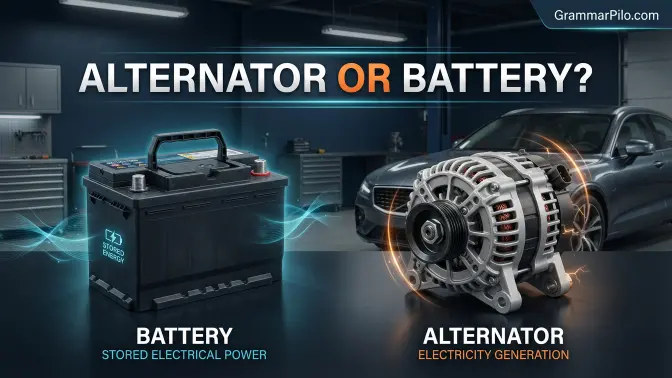
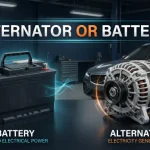
An alternator and a car battery work together to keep your vehicle running, but they perform different jobs.
The battery supplies the electrical power needed to start the engine, while the alternator generates electricity to run the vehicle’s electrical systems and recharge the battery while the engine is running.
If your car will not start, the lights are dim, or the battery warning light appears on the dashboard, either component could be responsible.
Understanding battery and alternator problems can save you time and help prevent unnecessary repairs.
A weak battery may struggle to start the engine, while a failing alternator can prevent the battery from charging properly. Both problems can produce similar symptoms, making it difficult to identify the actual cause.
In this guide, we compare an alternator vs. a battery, explain their functions, highlight the warning signs of failure, and show you how to distinguish between the two. You will also learn which component to check first and when professional testing is necessary.
Alternator or Battery: Quick Answer
The battery is usually responsible for starting the engine, while the alternator keeps the electrical system powered and recharges the battery as the engine runs.
Here is the basic difference:
| Feature | Car Battery | Alternator |
| Main function | Stores electrical energy | Generates electrical energy |
| Primary job | Starts the engine | Powers electrical systems and charges the battery |
| When it works | Especially during startup and when the engine is off | Mainly while the engine is running |
| Common failure sign | Clicking sound or slow engine cranking | Battery warning light or electrical problems while driving |
| Typical lifespan | Around 3–5 years, depending on conditions | Often around 7–10 years, depending on use and vehicle |
| Replacement | Battery replacement | Alternator replacement or repair |
The easiest way to remember the difference: The battery starts your car, and the alternator keeps it charged while the engine runs.
However, these components depend on each other. A faulty alternator can drain a healthy battery, while a weak battery can put additional strain on the charging system.
What Is a Car Battery?
A car battery is a rechargeable electrical storage device that supplies the energy needed to start the engine.
In most conventional vehicles, it is a 12 volt lead acid battery, although some vehicles use AGM, EFB, lithium based, or other battery technologies.
When you turn the ignition key or press the start button, the battery sends electrical current to the starter motor. The starter motor then turns the engine until it begins running independently.
The battery also supplies electricity when the engine is switched off.
Main Functions of a Car Battery
A car battery performs several important functions.
- Starting the engine: Supplies the initial electrical power required by the starter motor.
- Powering accessories: Runs systems such as interior lights, security systems, and infotainment when the engine is off.
- Supporting electrical demand: Helps stabilize voltage and provides additional power when electrical demand temporarily exceeds alternator output.
- Maintaining vehicle memory: Helps preserve certain electronic settings and stored information when the engine is not running.
Common Types of Car Batteries
Different vehicles require different battery technologies.
1. Flooded Lead Acid Battery
This is a traditional battery commonly used in conventional vehicles. It is generally affordable and widely available.
2. AGM Battery
An Absorbent Glass Mat battery is designed to handle higher electrical demands and is commonly used in vehicles with start stop technology and advanced electrical systems.
3. EFB Battery
Enhanced Flooded Batteries offer improved cycling performance compared with conventional flooded batteries. They are often used in vehicles with basic start stop systems.
4. Lithium Based Battery
Some modern vehicles, particularly hybrids and electric vehicles, use lithium based batteries for specific electrical functions. These should not be confused with the separate high voltage traction batteries used to power electric motors.
Choosing the correct battery depends on the vehicle manufacturer’s specifications.
What Is an Alternator?
An alternator is an electrical generator connected to the vehicle’s engine through a drive belt. It converts mechanical energy from the running engine into electrical energy.
Its main responsibility is to supply electricity to the vehicle’s electrical systems and recharge the battery.
When the engine runs, the alternator produces alternating current (AC), which is converted into direct current (DC) by internal diodes. A voltage regulator helps control the charging voltage to protect the battery and electrical components.
Main Functions of an Alternator
The alternator supports several essential vehicle operations.
- Recharging the battery: Replaces the electrical energy used during engine startup.
- Powering electrical accessories: Supplies electricity to headlights, dashboard displays, air conditioning controls, and other systems.
- Maintaining electrical voltage: Helps keep the vehicle’s electrical system within its intended operating range.
- Supporting continuous operation: Allows the vehicle to run its electrical systems without relying entirely on stored battery energy.
Important Parts of an Alternator
An alternator contains several components that work together.
1. Rotor: The rotating magnetic component that helps generate electricity.
2. Stator: The stationary winding where electrical current is produced.
3. Diode Rectifier: Converts the generated alternating current into direct current.
4. Voltage Regulator: Controls the charging voltage supplied to the electrical system.
5. Bearings: Allow the alternator’s rotating parts to move smoothly.
A problem with any of these components can affect charging performance.
Alternator vs. Battery: Key Differences
Although both components are part of the same electrical system, their responsibilities are not interchangeable.
1. Function and Purpose
The battery stores electricity for later use. It provides the initial power needed to start the engine and supports electrical accessories when the engine is off.
The alternator generates electricity while the engine runs. It supplies power to electrical systems and replenishes the battery.
In simple terms, the battery stores energy, while the alternator produces it.
2. How They Work
A battery uses chemical reactions to store and release electrical energy. When the engine is started, it sends current to the starter motor.
An alternator uses electromagnetic induction. The engine turns its rotor, creating an electrical output that is regulated and supplied to the vehicle.
Both components must function properly for reliable starting and electrical operation.
3. Lifespan
A typical car battery lasts approximately three to five years, although extreme temperatures, driving habits, and maintenance can shorten or extend its service life.
An alternator often lasts around seven to ten years, but its lifespan depends on mileage, operating conditions, belt condition, heat, and electrical load.
These are general estimates rather than guaranteed replacement intervals.
4. Cost of Replacement
Battery replacement is generally less expensive and simpler than alternator replacement.
Alternator replacement can cost more because the part is usually more expensive and installation may require additional labor.
Actual costs vary according to the vehicle model, battery specifications, alternator type, parts availability, and local labor rates.
5. Symptoms of Failure
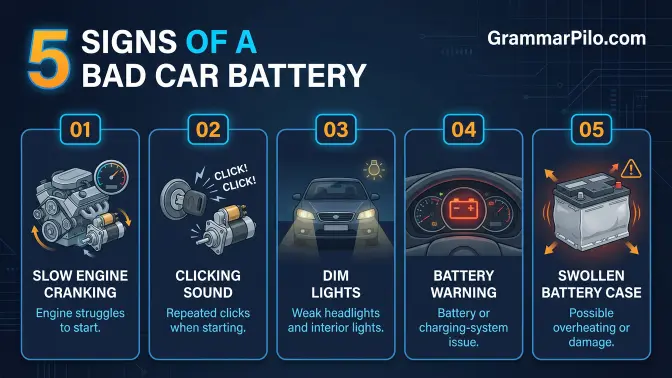
A failing battery commonly causes slow engine cranking, clicking sounds, and difficulty starting the vehicle.
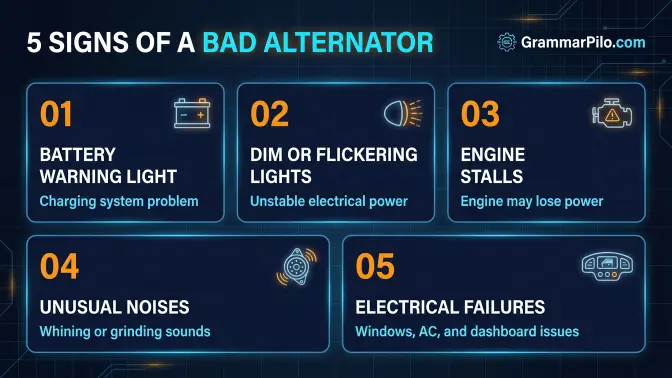
A failing alternator may cause a battery warning light, dimming headlights, unusual electrical behavior, and eventual engine stalling if the battery becomes depleted.
These symptoms can overlap, so testing is more reliable than guessing.
Signs of a Bad Battery
A weak or damaged battery can create several noticeable problems.
1. Slow Engine Cranking
One of the most common signs of a weak battery is slow engine cranking.
When you start the car, the engine may turn over more slowly than usual. You might hear a struggling sound before the engine starts.
This happens because the battery cannot provide enough current to operate the starter motor effectively.
2. Clicking Sound When Starting
If you turn the ignition and hear repeated clicking without the engine starting, the battery may be too weak to power the starter motor.
However, a faulty starter motor, loose connections, or corroded battery terminals can produce similar symptoms.
3. Dim Headlights and Interior Lights
A weak battery can cause electrical accessories to operate poorly, particularly when the engine is off.
You may notice dim interior lights, weak dashboard illumination, or headlights that appear less bright than usual.
If the lights become noticeably dim while driving, investigate the alternator and charging system as well.
4. Battery Warning or Low Voltage
Some vehicles display a battery related warning when the electrical system detects a problem.
A battery warning does not automatically mean the battery itself needs replacement. It can also indicate a charging system issue.
5. Swollen or Damaged Battery Case
A visibly swollen battery case can indicate overheating, overcharging, or internal damage.
A damaged battery should be inspected and replaced as necessary. Do not attempt to open it or handle leaking battery acid.
Signs of a Bad Alternator
An alternator problem can affect multiple electrical systems because the vehicle depends on it for continuous power while running.
1. Battery Warning Light Appears
A battery shaped warning light on the dashboard is one of the most recognizable signs of a charging system problem.
It may indicate that the alternator is not charging correctly, but other issues such as a damaged belt, wiring fault, or regulator problem can also trigger the warning.
2. Headlights Become Dim or Flicker
If the alternator cannot provide consistent electrical output, the headlights may dim or flicker.
You might also notice changes in dashboard brightness or unstable operation of other electrical accessories.
3. Engine Stalls While Driving
A failing alternator may stop supplying sufficient electricity to the vehicle.
As the battery loses its remaining charge, electronic systems can stop working properly. Eventually, the engine may stall.
If this happens, pull over safely and arrange professional assistance.
4. Unusual Whining or Grinding Noise
A damaged alternator bearing or pulley can produce whining, grinding, or other unusual sounds.
A loose or slipping drive belt can also create squealing noises.
These sounds should be inspected rather than ignored.
5. Electrical Accessories Stop Working Properly
A failing charging system can affect several electrical features, including:
- Headlights
- Dashboard displays
- Power windows
- Air conditioning controls
- Audio systems
- Electronic safety features
If several electrical components begin behaving strangely at the same time, the alternator or charging system deserves attention.
How to Tell If It Is the Alternator or Battery
The symptoms of a bad alternator and a bad battery can overlap. However, a few observations can help narrow down the problem.
| Symptom | More Likely Cause | Other Possible Causes |
| Car does not start after sitting overnight | Battery | Parasitic electrical drain |
| Repeated clicking during startup | Battery | Starter or cable connection |
| Battery warning light while driving | Alternator or charging system | Wiring or belt problem |
| Car starts with a jump but fails again after driving | Alternator or charging system | Severely damaged battery |
| Engine cranks slowly | Battery | Starter or poor connections |
| Headlights dim while driving | Alternator or charging system | Wiring or electrical fault |
| Battery repeatedly goes flat | Either component | Parasitic drain or loose connections |
Check 1: Observe What Happens When Starting
Pay attention to how the vehicle behaves when you turn the ignition.
- A clicking sound or slow cranking may indicate a weak battery.
- No electrical response may indicate a completely discharged battery, disconnected terminals, or an electrical fault.
- Normal cranking without starting may point toward a different engine or fuel related issue.
Check 2: Look at the Dashboard Warning Light
A battery shaped warning light that stays illuminated while the engine is running usually indicates a charging system problem.
It does not confirm that the alternator itself is defective, but it means the electrical system needs inspection.
Check 3: Use a Digital Multimeter
A digital multimeter can help assess battery voltage and charging system performance.
For a conventional 12 volt lead acid battery, approximate readings are:
| Condition | Typical Voltage |
| Fully charged battery at rest | 12.6–12.8 V |
| Partially discharged battery | Around 12.2 V |
| Significantly discharged battery | Around 12.0 V or lower |
| Conventional charging system operation | Often around 13.5–14.8 V |
These are general reference ranges. Temperature, battery chemistry, vehicle design, and smart charging systems can affect the readings.
Modern vehicles may intentionally vary alternator output, so a single running voltage measurement is not always enough to diagnose a fault.
Safety note: Never disconnect the battery while the engine is running to test the alternator. This outdated method can damage vehicle electronics.
Check 4: Get a Professional Charging System Test
A workshop can test the battery’s condition, alternator output, starter current, and charging system connections.
A proper test can help identify:
- A battery that cannot hold a charge
- An alternator that is not producing sufficient output
- A faulty voltage regulator
- Loose or corroded battery connections
- A damaged drive belt
- Unwanted electrical drain when the vehicle is switched off
Testing both components is often the best way to avoid replacing the wrong part.
Can a Bad Alternator Drain a Good Battery?
Yes. A failing alternator can leave a healthy battery without enough charge.
When the alternator stops generating sufficient electricity, the vehicle begins relying on the battery to operate its electrical systems.
The battery gradually loses its stored energy. Once the voltage becomes too low, the vehicle may develop electrical problems or fail to start.
For example, imagine that your car starts normally in the morning but the battery warning light appears while driving. After some time, the headlights become dim and the vehicle eventually stops.
In this situation, the alternator or charging system may be failing.
Replacing the battery alone will not solve the underlying problem if the alternator cannot recharge it.
Can a Bad Battery Damage an Alternator?
A weak battery does not automatically damage an alternator, but certain battery problems can increase stress on the charging system.
For example, a severely deteriorated battery may have difficulty accepting or holding a charge. This can cause the charging system to operate under unusual conditions.
Other problems, such as shorted battery cells or incorrect battery specifications, can create additional electrical stress.
However, alternator failure is also influenced by heat, age, worn bearings, damaged diodes, belt problems, and electrical faults.
If a battery repeatedly fails, check the charging system before installing another one.
Which Should You Replace First: Battery or Alternator?
The correct replacement depends on which component has actually failed.
Replace the Battery If:
- The battery fails a proper load or health test.
- The engine cranks slowly because the battery cannot supply sufficient current.
- The battery is old or physically damaged.
- The alternator and charging system test normally.
- The battery cannot retain its charge after being correctly recharged.
Replace the Alternator If:
- The charging system fails its output test.
- The battery warning light remains illuminated while driving.
- The alternator has damaged internal components.
- Electrical systems behave abnormally because of insufficient charging output.
- The battery repeatedly becomes discharged despite being in good condition.
Test Both Before Spending Money
Sometimes the battery and alternator are both damaged. In other cases, the actual problem is a loose cable, corroded terminal, faulty belt, or parasitic drain.
A professional diagnosis can help you avoid replacing a perfectly good component.
Everyday Examples of Alternator and Battery Problems
These examples show how the two components can create similar but different problems.
Example 1: Car Does Not Start in the Morning
Situation: You turn the ignition, but the engine only clicks or cranks very slowly.
Likely cause: A weak or discharged battery is a common possibility.
What to check: Battery condition, terminal connections, and possible overnight electrical drain.
Example 2: Car Starts but Stops Later
Situation: Your vehicle starts normally, but the battery warning light appears and electrical systems gradually stop working.
Likely cause: An alternator or charging system failure is possible.
What to check: Alternator output, drive belt, wiring, and charging system connections.
Example 3: New Battery Keeps Losing Charge
Situation: You recently installed a new battery, but it becomes discharged again after driving.
Likely cause: The alternator may not be charging correctly, or another electrical problem may be draining the battery.
What to check: Charging voltage, battery condition, and parasitic current draw.
Example 4: Headlights Flicker While Driving
Situation: Your headlights become brighter and dimmer while the engine is running.
Likely cause: An unstable charging system, voltage regulator issue, or electrical connection problem may be responsible.
What to check: Alternator output and electrical connections.
Battery vs. Alternator: Which One Is More Important?
Neither component is more important because both are necessary for a conventional vehicle’s electrical system.
The battery provides the initial electrical energy needed to start the engine. The alternator then generates electricity to support the vehicle and recharge the battery.
Without a working battery, the vehicle may not start. Without a functioning alternator, the battery may eventually become depleted while the vehicle is operating.
Their importance depends on the situation:
| Situation | Component That Matters Most |
| Starting the engine | Battery |
| Charging while driving | Alternator |
| Running electrical accessories with engine off | Battery |
| Maintaining electrical power while driving | Alternator |
| Replacing a worn out starting battery | Battery |
| Fixing a charging system failure | Alternator or related components |
The best approach is to maintain both components and inspect the entire charging system when warning signs appear.
Frequently Asked Questions
1. How Do I Know If My Alternator or Battery Is Bad?
A weak battery commonly causes slow cranking, clicking sounds, and starting difficulties. A failing alternator may cause a battery warning light, flickering headlights, and electrical problems while driving. A battery and charging system test can confirm the cause.
2. Can a Car Run With a Bad Alternator?
A car may continue running temporarily with a failing alternator if the battery still has enough stored energy. However, the battery will gradually discharge, and the vehicle may eventually stall or lose electrical functions.
3. How Long Can a Car Run With a Bad Alternator?
There is no reliable fixed time. It depends on the battery’s charge, vehicle design, electrical demand, and the severity of the alternator problem. Driving with a failing charging system is risky because the engine may stop unexpectedly.
4. Will a New Battery Fix a Bad Alternator?
No. A new battery may temporarily help the vehicle start, but it will not repair a faulty alternator. If the alternator cannot recharge the battery, the replacement battery can also become discharged.
5. Does a Bad Alternator Make a Clicking Noise?
A failing alternator can sometimes produce whining or grinding noises from damaged bearings or pulleys. However, repeated clicking when starting the vehicle is more commonly associated with a weak battery, starter problem, or poor electrical connection.
6. Can Jump Starting a Car Damage the Alternator?
A properly performed jump start using the vehicle manufacturer’s recommended procedure is generally safe. However, incorrect connections, reversed polarity, or electrical surges can damage sensitive components. Always follow the owner’s manual.
7. How Often Should I Replace My Car Battery?
Many conventional car batteries last around three to five years. Extreme heat, frequent short trips, long periods without driving, and charging problems can reduce their lifespan. Regular battery testing can help identify deterioration before the vehicle fails to start.
Conclusion
Understanding the difference between an alternator and a battery makes car troubleshooting much easier.
The battery stores electrical energy and supplies the power needed to start the engine, while the alternator generates electricity to operate the vehicle’s electrical systems and recharge the battery.
If your car struggles to start, the battery is a sensible first component to test. However, if the battery warning light appears while driving, the headlights flicker, or a replacement battery repeatedly loses charge, the alternator and charging system should also be inspected.
Remember that similar symptoms do not always mean the same component has failed. A weak battery, faulty alternator, damaged wiring, loose connections, or parasitic electrical drain can all create starting and charging problems.
Testing both components before replacing anything is the most reliable way to identify the issue and avoid unnecessary repair costs.
Discover More Articles

I’m Sloane Mercer, a U.S.-based English language writer focused on grammar, spelling, vocabulary, and everyday English usage. Through GrammarPilo, I provide clear and practical explanations to help readers choose the right words and communicate with confidence.





1 thought on “Alternator or Battery: How to Tell Which Is Causing Car Problems”