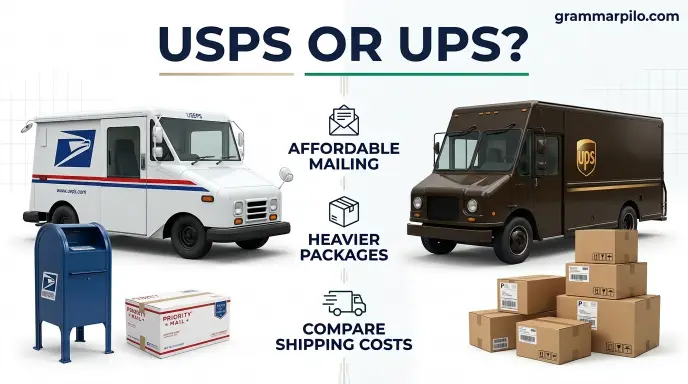
Choosing between USPS or UPS depends on what you are shipping, how quickly it needs to arrive, and how much you want to spend. Both companies are major shipping providers in the United States, but they serve different customer needs.
USPS is the United States Postal Service, a government operated postal service known for affordable mail delivery, PO boxes, and residential coverage. UPS is a private shipping and logistics company known for package delivery, business shipping, and a wide range of domestic and international services.
Although both companies deliver packages, their pricing structures, delivery options, tracking systems, and service networks are different.
USPS can be a practical choice for everyday mail, lightweight packages, and budget conscious shipping. UPS may be more suitable for heavier shipments, business deliveries, and services that require specific delivery arrangements.
This guide compares UPS and USPS in detail. You will learn how their shipping costs, delivery speeds, package limits, tracking, international services, and business solutions differ so you can choose the right provider for your needs.
USPS vs. UPS: The Short Answer
USPS is generally a better choice for letters, lightweight packages, residential deliveries, and affordable shipping. UPS is often a stronger option for heavier packages, business shipments, scheduled delivery services, and logistics needs.
Both providers offer domestic and international shipping, package tracking, and additional services. However, the best option depends on the package’s weight, dimensions, destination, delivery deadline, and required level of service.
| Feature | USPS | UPS |
| Full name | United States Postal Service | United Parcel Service |
| Organization | Independent federal establishment | Private company |
| Best for | Mail and affordable package shipping | Packages and business logistics |
| Lightweight packages | Often economical | Available services vary |
| Heavy packages | Service and size limits apply | Strong option for heavier shipments |
| Residential delivery | Yes | Yes |
| PO Box delivery | Yes | Generally not to USPS PO Boxes |
| International shipping | Yes | Yes |
| Package tracking | Available on eligible services | Available on eligible services |
| Saturday delivery | Available on many services | Available on selected services |
| Sunday delivery | Available on selected services | Available on selected services |
| Best overall use | Everyday mailing and budget shipping | Business and larger package shipping |
Quick recommendation: Choose USPS for many everyday mailing needs and smaller packages. Consider UPS when shipping heavier items, managing business deliveries, or requiring specific logistics services.
What Is USPS?
USPS stands for United States Postal Service. It is an independent establishment of the executive branch of the U.S. federal government. Its primary responsibility is providing postal services throughout the United States.
USPS delivers letters, postcards, documents, magazines, and packages. It serves residential addresses, businesses, rural communities, and locations that may be difficult for private delivery companies to reach.
One of its biggest advantages is its extensive delivery network. USPS delivers to nearly every address in the country, making it an important option for everyday mail and residential shipping.
What Services Does USPS Offer?
USPS provides several mailing and shipping services for individuals and businesses.
- First Class Mail: Used for letters, postcards, and other qualifying mail.
- USPS Ground Advantage: A ground shipping option for eligible packages.
- Priority Mail: A domestic shipping service that generally offers faster delivery than standard ground options.
- Priority Mail Express: An expedited service for time sensitive shipments.
- Media Mail: A lower cost option for eligible educational and media materials.
- International Shipping: Services for sending letters and packages to destinations outside the United States.
Service availability, delivery estimates, and package restrictions depend on the destination and shipment.
Who Should Use USPS?
USPS can be a good choice for:
- Individuals sending letters and documents.
- Online sellers shipping lightweight products.
- Small businesses managing everyday orders.
- People sending packages to residential addresses.
- Customers who need access to PO Box services.
- Senders looking for economical mailing options.
USPS is especially useful when affordability and nationwide residential coverage are more important than specialized delivery arrangements.
What Is UPS?
UPS stands for United Parcel Service. It is a private shipping and logistics company that provides domestic and international package delivery, freight services, and supply chain solutions.
UPS is widely used by individuals, retailers, manufacturers, and businesses that need to move packages across cities, states, and countries.
The company operates a large transportation network that includes delivery vehicles, aircraft, sorting facilities, and distribution centers.
What Services Does UPS Offer?
UPS offers several shipping options for different delivery requirements.
- UPS Ground: A domestic ground shipping service for packages that do not require the fastest available delivery.
- UPS 2nd Day Air: A service designed for delivery within two business days in eligible areas.
- UPS Next Day Air: An expedited option for time sensitive domestic shipments.
- UPS Worldwide Services: International shipping options for documents and packages.
- UPS Freight and Logistics Solutions: Services for larger commercial shipments and supply chain requirements.
The exact delivery commitment depends on the selected service, origin, destination, and applicable conditions.
Who Should Use UPS?
UPS may be suitable for:
- Businesses shipping products regularly.
- Retailers handling larger customer orders.
- People sending heavier packages.
- Companies managing international shipments.
- Customers who need scheduled or expedited delivery options.
- Organizations that require shipping and logistics support.
UPS is particularly useful for businesses that need more than basic mail delivery.
USPS vs. UPS: Shipping Costs
Shipping costs are one of the most important factors when choosing a delivery company.
Neither USPS nor UPS is always cheaper. The final price depends on the package’s weight, dimensions, destination, delivery speed, and selected service.
USPS Shipping Costs
USPS offers several services that can be economical for letters and smaller packages.
Its pricing options include services designed for lightweight mail, everyday packages, and faster deliveries.
The total cost can depend on:
- Package weight.
- Package dimensions.
- Shipping zone.
- Selected service.
- Additional insurance.
- Special handling requirements.
USPS can be especially attractive to online sellers who ship small products such as accessories, clothing, stationery, and other lightweight items.
UPS Shipping Costs
UPS offers different pricing options for domestic and international package delivery.
Its charges can depend on:
- Actual package weight.
- Dimensional weight.
- Shipping distance.
- Delivery speed.
- Package dimensions.
- Additional services.
- Residential or other applicable surcharges.
Dimensional weight is important because a large, lightweight box may cost more to ship than expected.
Businesses may also qualify for negotiated rates or discounts depending on their shipping volume and account arrangements.
Which Is Cheaper, USPS or UPS?
USPS is often competitive for smaller and lighter packages. UPS may offer better value for some heavier shipments or business shipping arrangements.
However, the cheapest provider can change depending on the package and destination.
| Shipping Situation | Provider Worth Comparing First |
| Letters and postcards | USPS |
| Small lightweight packages | USPS |
| Large packages | Compare both |
| Heavy packages | UPS |
| Business shipping | Compare negotiated rates |
| Urgent delivery | Compare express services |
| International packages | Compare destination specific rates |
Winner: USPS is often a good starting point for lightweight shipments, while UPS deserves consideration for heavier packages. Always compare the actual shipping quotes.
USPS vs. UPS: Delivery Speed
Delivery speed matters when a package must reach its destination by a particular date.
Both companies offer standard and expedited shipping services, but their delivery estimates and guarantees vary.
USPS Delivery Speed
It provides several delivery options.
- First Class Mail: Used for qualifying letters and documents, with delivery estimates that depend on the destination.
- USPS Ground Advantage: A ground service with an estimated delivery window that varies by distance.
- Priority Mail: Generally provides faster domestic delivery than ground shipping.
- Priority Mail Express: An expedited service with an advertised delivery commitment for eligible destinations.
USPS can be a convenient choice for everyday deliveries that do not require specialized scheduling.
UPS Delivery Speed
It offers different services based on how quickly a package needs to arrive.
- UPS Ground: Suitable for standard domestic shipments.
- UPS 3 Day Select: Designed for delivery within three business days in eligible areas.
- UPS 2nd Day Air: Provides a faster delivery option for eligible destinations.
- UPS Next Day Air: Designed for next business day delivery under the selected service’s conditions.
UPS also offers international expedited services for shipments that need faster transportation across borders.
Which Is Faster?
Neither company is always faster.
A USPS Priority Mail package may arrive sooner than a UPS Ground shipment, while UPS Next Day Air may be more appropriate for an urgent delivery.
The correct comparison is between services with similar delivery commitments.
Winner: UPS offers a broad range of time specific express services. USPS also provides expedited delivery options, so compare the actual delivery estimates for your route.
USPS vs. UPS: Package Size and Weight Limits
Package size and weight can determine which shipping provider is suitable.
A service that works for a small envelope may not be appropriate for a large commercial shipment.
USPS Package Limits
USPS has specific size and weight restrictions that vary by service.
For many domestic package services, the maximum weight is 70 pounds. However, certain services have different limits and additional restrictions.
USPS also applies size requirements to packages. Oversized shipments may require additional charges or may not qualify for a particular service.
Before shipping, check the applicable size, weight, and packaging rules.
UPS Package Limits
UPS accepts a wide range of package sizes and weights through its different shipping services.
For many standard UPS small package services, individual packages can generally weigh up to 150 pounds. Additional size restrictions apply, and larger shipments may require freight services.
UPS can be useful for heavier shipments that exceed the limits of many standard postal services.
Which Is Better for Large or Heavy Packages?
UPS is often the better starting point for heavy packages because its standard package network supports higher individual package weights.
USPS can still be suitable for many ordinary packages, but its service limits may restrict larger shipments.
Winner: UPS for many heavier shipments. Check the exact service restrictions before sending oversized or unusually heavy items.
USPS vs. UPS: Tracking and Delivery Updates
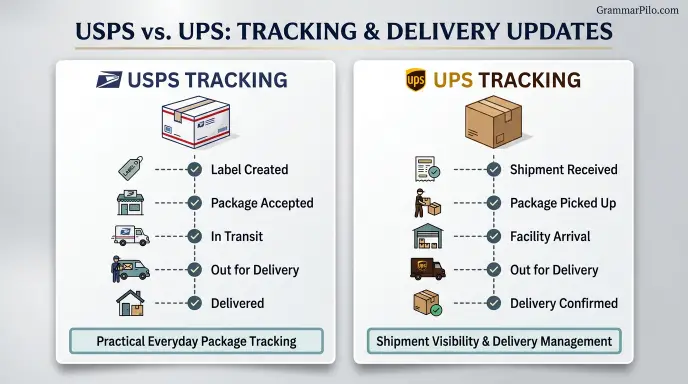
Tracking helps customers follow a package from the shipping location to its destination.
Both USPS and UPS provide tracking systems, but the available updates can depend on the service and shipment.
USPS Tracking
USPS offers tracking on eligible shipping services.
Customers can enter a tracking number online to check package progress and delivery information.
Available updates may include:
- Shipping label created.
- Package accepted.
- Package processed at a facility.
- Package in transit.
- Out for delivery.
- Delivered.
Some lower cost mailing services may not include the same tracking features as package services.
UPS Tracking
UPS provides tracking for its package delivery services.
Customers can use a tracking number to follow a shipment through different stages of transportation.
Depending on the service, tracking information may include:
- Shipment information received.
- Package picked up.
- Arrival at a UPS facility.
- Departure from a facility.
- Out for delivery.
- Delivery confirmation.
UPS may also provide additional delivery management features for eligible shipments.
Which Tracking System Is Better?
Both companies provide useful tracking tools.
UPS can be attractive for businesses that need shipment visibility and delivery management. USPS offers practical tracking for many everyday package shipments.
Winner: Both are strong options. The better tracking experience depends on the service and the level of shipment visibility you need.
USPS vs. UPS: International Shipping
International shipping involves more than moving a package between countries.
You may need customs forms, accurate product descriptions, duties, taxes, and information about restricted items.
Both USPS and UPS offer international shipping services, but their networks and service options differ.
USPS International Shipping
USPS offers international mailing and package services for eligible destinations.
Its options include:
- First Class Mail International.
- First Class Package International Service, where available under current service rules.
- Priority Mail International.
- Priority Mail Express International.
USPS can be useful for sending documents, gifts, and smaller packages internationally.
Delivery estimates and tracking availability vary by service and destination.
UPS International Shipping
UPS offers international shipping services for documents, packages, and commercial shipments.
Its services include different delivery speeds and logistics options.
UPS can be useful for businesses that regularly ship products internationally or need more structured shipping arrangements.
Depending on the destination and service, UPS may provide additional customs support and shipment management options.
Which Is Better for International Shipping?
USPS may be attractive for smaller international packages where affordability is important.
UPS may be a better choice for heavier shipments, business deliveries, and time sensitive international transportation.
| International Shipping Need | Provider to Consider |
| Small packages | USPS |
| Important business shipments | UPS |
| Expedited international delivery | Compare UPS and USPS express options |
| Documents | Either |
| Larger commercial shipments | UPS |
| Budget focused shipping | Compare USPS options first |
Winner: UPS for many business logistics requirements. USPS is worth comparing for smaller, budget conscious international shipments.
USPS vs. UPS: Residential and Business Delivery
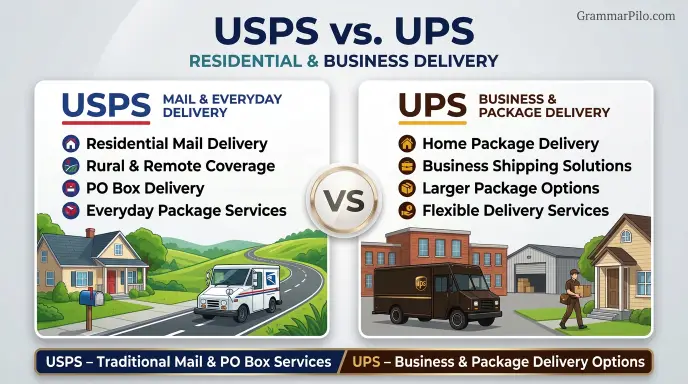
Delivery location can influence which provider makes more sense.
UPS and USPS both serve homes and businesses, but their delivery networks have different strengths.
USPS Residential Delivery
USPS delivers to residential addresses throughout the United States, including many rural and remote communities.
It also provides services such as PO Box delivery, which is important for people who receive mail through a post office rather than a street address.
This broad coverage makes USPS useful for everyday residential deliveries.
UPS Residential Delivery
UPS delivers packages to homes and businesses across its domestic and international network.
It offers different delivery services and options for customers who need specific shipping arrangements.
Residential delivery may involve additional charges depending on the service and account terms.
UPS also offers business oriented shipping and logistics solutions that can support regular commercial deliveries.
Which Is Better for Residential Delivery?
USPS is particularly useful for standard mail, PO Boxes, and broad residential coverage.
UPS is a strong alternative for larger packages and deliveries that need specific service options.
Winner: USPS for traditional mail and PO Box services. UPS for many business and package delivery requirements.
USPS vs. UPS: Business Shipping
Businesses often have different shipping needs from individual customers.
An online store may send hundreds of packages each week, while a manufacturer may need to transport large products between facilities.
USPS for Small Businesses
USPS can help small businesses manage everyday package delivery without needing a complex logistics arrangement.
It may be suitable for sellers who ship:
- Clothing.
- Small accessories.
- Books.
- Stationery.
- Beauty products.
- Lightweight household items.
Its different mailing and package services can help sellers match shipping costs to their products.
UPS for Businesses
UPS provides a broader range of shipping and logistics services for businesses with different transportation needs.
Businesses may use UPS for:
- Larger customer orders.
- Heavy packages.
- Domestic distribution.
- International shipping.
- Scheduled delivery services.
- Supply chain management.
- Freight transportation.
UPS also offers business shipping tools and account options that can help manage recurring shipments.
Which Is Better for Business Shipping?
USPS may be a practical choice for small businesses shipping lightweight products.
UPS may be more suitable for companies that handle heavier packages, larger shipments, or more complex logistics.
Winner: It depends on the business model, shipping volume, package size, and negotiated rates.
USPS vs. UPS: Common Shipping Mistakes
Choosing a shipping provider without checking the details can lead to higher costs, delays, and unexpected problems.
Avoid these common mistakes.
1. Choosing Only by the Base Price
The cheapest advertised rate may not be the cheapest final shipping cost.
Compare delivery charges, surcharges, insurance, and other applicable fees before purchasing a label.
2. Ignoring Dimensional Weight
A large box can cost more to ship even if it contains a lightweight item.
Measure the package accurately and compare the actual and dimensional weight rules.
3. Selecting the Wrong Delivery Speed
Paying for express shipping is unnecessary if the package does not need to arrive urgently.
Choose a service based on the actual delivery deadline.
4. Forgetting to Check Package Restrictions
Some products have shipping restrictions because of their size, contents, or safety requirements.
Check the carrier’s rules before sending batteries, liquids, fragile products, or other restricted items.
5. Assuming Every Service Includes Tracking
Tracking features vary by mailing and shipping service.
Confirm that the selected option includes the tracking and delivery confirmation you need.
6. Ignoring International Customs Requirements
International packages may require accurate customs declarations and additional documentation.
Incorrect descriptions or missing information can cause delays or other problems.
USPS or UPS: Which One Should You Choose?
The best shipping provider depends on your package and delivery requirements.
Choose USPS If:
- You are sending letters or postcards.
- You are shipping lightweight packages.
- You want an affordable mailing option.
- You need to deliver to a PO Box.
- You are sending everyday residential packages.
- You run a small online store selling lightweight products.
- You do not need specialized logistics services.
Choose UPS If:
- You are shipping heavier packages.
- You need a specific expedited delivery service.
- You manage regular business shipments.
- You send larger commercial orders.
- You need freight or supply chain services.
- You want access to a broad range of business shipping solutions.
- Your shipment requires a particular delivery arrangement.
Which Is Better for Different Shipping Needs?
| Shipping Need | Recommended Starting Point | Reason |
| Letters and postcards | USPS | Traditional postal services |
| Small lightweight packages | USPS | Often competitive pricing |
| Heavy packages | UPS | Higher standard package weight limit |
| PO Box delivery | USPS | Direct PO Box service |
| Business logistics | UPS | Broader logistics solutions |
| Small online store orders | USPS | Useful for lightweight products |
| Urgent shipping | Compare both | Service deadlines vary |
| International documents | Either | Depends on destination and speed |
| Large commercial shipments | UPS | Freight and logistics options |
| Rural residential delivery | USPS | Extensive address coverage |
Quick Comparison Table: UPS vs. USPS
| Comparison | USPS | UPS |
| Full name | United States Postal Service | United Parcel Service |
| Organization | Federal establishment | Private company |
| Main focus | Mail and package delivery | Package delivery and logistics |
| Lightweight packages | Often economical | Available |
| Heavy packages | Many services capped at 70 pounds | Standard small package services generally allow up to 150 pounds |
| Letters | Yes | Not a traditional letter mail service |
| PO Boxes | Yes | Generally no direct PO Box delivery |
| Residential delivery | Yes | Yes |
| Business shipping | Yes | Yes |
| International services | Yes | Yes |
| Express delivery | Priority Mail Express | Multiple air services |
| Freight services | Limited compared with UPS | Yes |
| Best for | Everyday mail and affordable shipping | Heavier packages and business logistics |
Key Takeaways
- USPS stands for United States Postal Service, while UPS stands for United Parcel Service.
- USPS is an independent federal establishment, whereas UPS is a private company.
- USPS is often a good choice for letters, lightweight packages, and PO Box deliveries.
- UPS is a strong option for heavier shipments and business logistics.
- Both companies offer domestic and international shipping.
- Shipping prices depend on package weight, dimensions, destination, and delivery speed.
- Both providers offer tracking on eligible services.
- Neither company is always cheaper or faster.
- Comparing actual service quotes is the best way to find the right shipping option.
Frequently Asked Questions
1. Is USPS cheaper than UPS?
USPS is often competitive for letters and lightweight packages. UPS may provide better value for certain heavier shipments or business shipping arrangements. The final price depends on the package’s dimensions, weight, destination, and delivery speed. Compare actual quotes before choosing.
2. Is UPS faster than USPS?
UPS offers several expedited services, including next business day and two business day options for eligible destinations. USPS also offers Priority Mail and Priority Mail Express. Neither company is always faster, so compare the delivery commitments for your specific route.
3. What is the difference between USPS and UPS?
USPS is the United States Postal Service, an independent federal establishment responsible for mail and package delivery. UPS is a private shipping and logistics company. USPS is particularly useful for traditional mail and residential coverage, while UPS offers a wide range of package and business logistics services.
4. Can UPS deliver to a USPS PO Box?
UPS generally does not deliver directly to standard USPS PO Boxes because they are managed by the Postal Service. Some alternative address arrangements may be available through private mailbox providers, but customers should check the specific address requirements before shipping.
5. Does UPS or USPS deliver on Sunday?
Both providers offer Sunday delivery for selected services and eligible locations. USPS offers Sunday delivery for certain qualifying packages, while UPS Sunday operations depend on the service and location. Check the delivery estimate before selecting a shipping option.
6. Which is better for international shipping, USPS or UPS?
USPS can be a good option for smaller international packages and documents when cost matters. UPS may be more suitable for businesses, heavier shipments, and time sensitive deliveries. Compare international rates, tracking, customs requirements, and delivery estimates.
7. Can I use USPS and UPS for the same package?
You can use different carriers at different stages of a shipping process, but you should follow the selected service’s rules and label requirements. Some services involve one carrier handing a package to another delivery provider. Do not place multiple unrelated shipping labels on a package.
8. Which company is better for small businesses?
USPS can be useful for small businesses that ship lightweight products and need economical mailing options. UPS may be better for businesses shipping heavier items, larger orders, or international commercial shipments. Shipping volume and negotiated rates can change the overall value.
9. Does USPS offer package tracking?
Yes. USPS provides tracking on eligible package services. Customers can enter a tracking number on the official website to view available shipment updates. Tracking availability and the level of detail depend on the selected service.
10. Does UPS have a weight limit?
UPS has weight and size restrictions that depend on the service. Many standard UPS small package services generally accept individual packages weighing up to 150 pounds. Larger shipments may require freight services or special arrangements.
Conclusion: USPS or UPS?
USPS and UPS both provide reliable shipping options, but they are designed to serve different needs. USPS is a practical choice for everyday mail, lightweight packages, PO Box deliveries, and budget conscious shipping. UPS is often more suitable for heavier packages, business shipments, expedited transportation, and broader logistics requirements.
The best option is not always the company with the lowest advertised price. Package dimensions, actual weight, destination, delivery deadline, and additional fees can change the final cost.
If you are shipping a small package, start by comparing USPS services. For a heavy shipment or business delivery, check UPS as well. When the delivery deadline is important, compare the actual service commitments instead of relying on general delivery estimates.
The final verdict: Choose USPS for everyday mailing and many lightweight packages. Choose UPS for heavier shipments and more specialized business shipping needs.
Other Word Differences Explained

I’m Claire Morgan, the author behind Grammarpilo.com, where I write about English grammar, sentence structure, punctuation, and everyday language. My goal is to make grammar simple, clear, and practical, helping readers understand the rules and apply them with confidence in real-world writing.