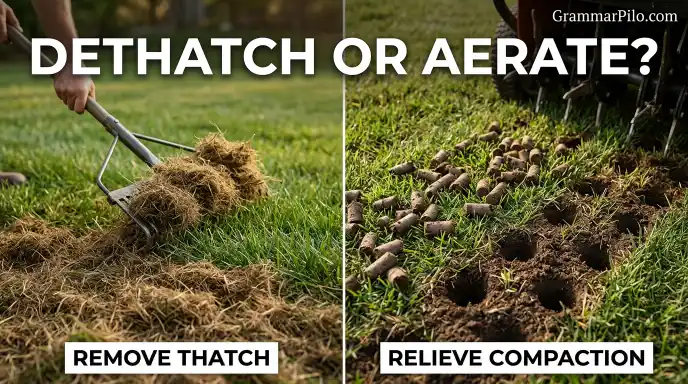
Dethatching and aerating are two important lawn care treatments, but they solve different problems.
Dethatching removes the thick layer of dead grass, roots, and organic material that builds up between the soil surface and green grass, while aerating creates small holes in the soil to improve airflow, water absorption, and root growth.
Choosing between dethatching or aerating depends on the condition of your lawn, the type of soil, and the problems you are trying to fix.
Both treatments can help maintain a healthier, greener lawn, but using the wrong one may waste time and put unnecessary stress on your grass. A lawn with excessive thatch needs dethatching, while compacted soil usually benefits from aeration.
Some lawns may need both treatments, although they should be performed at suitable times and with proper care.
In this guide, you will learn the difference between dethatching and aerating, how each treatment works, when to use them, and how to decide which lawn care method is right for your yard.
Dethatch or Aerate: Quick Answer
The main difference between dethatching and aerating is the lawn problem each treatment addresses.
- Dethatching: Removes excessive thatch, a layer of dead grass, roots, and other organic material that accumulates near the soil surface.
- Aerating: Creates openings in compacted soil so that air, water, and nutrients can reach grass roots more effectively.
Choose dethatching if your lawn has a thick, spongy layer of organic material that prevents water from reaching the soil.
Choose aeration if the ground feels hard, water runs off instead of soaking in, or grass struggles to grow because the soil is compacted.
| Lawn Problem | Recommended Treatment |
| Thick thatch layer | Dethatching |
| Hard, compacted soil | Aerating |
| Poor water absorption | Usually aerating |
| Excessive dead grass buildup | Dethatching |
| Weak root development | Aerating |
| Spongy lawn surface | Check for excessive thatch |
| Both thatch and compaction problems | Potentially both |
The simplest way to remember the difference is that dethatching removes material from above the soil, while aerating creates openings inside the soil.
What Is Dethatching?
Dethatching is a lawn care process that removes excessive thatch from the surface of the soil.
Thatch is a layer of living and dead grass stems, roots, and other organic material that develops between the green grass blades and the soil. A small amount is normal and can help protect the ground, but excessive thatch may interfere with water movement and lawn health.
Why Does Thatch Build Up?
Thatch develops when organic material accumulates faster than soil organisms can break it down.
Several factors can contribute to excessive thatch buildup, including:
- Certain grass varieties that produce large amounts of stems and roots.
- Excessive nitrogen fertilization that encourages rapid growth.
- Soil conditions that slow the decomposition of organic material.
- Lawn management practices that contribute to an imbalance between growth and decomposition.
Contrary to a common belief, leaving grass clippings on the lawn does not automatically cause thatch. Properly sized clippings usually break down relatively quickly.
How Does Dethatching Work?
Dethatching equipment uses rotating blades, tines, or similar mechanisms to pull excessive organic material away from the lawn.
Common methods include:
- Manual dethatching: A special rake is used to loosen and remove thatch from small lawn areas.
- Power dethatching: A motorized machine removes accumulated material more efficiently.
- Vertical mowing: Specialized blades cut vertically into the grass canopy to remove thatch and excess plant material.
After dethatching, the lawn may look rough or thin because the equipment pulls out dead material and can disturb grass plants.
For this reason, dethatching should be performed only when the thatch layer is excessive and the grass can recover under suitable growing conditions.
When Should You Dethatch?
Dethatching is generally best when the grass is actively growing and can recover from the disturbance.
The ideal season depends on the grass variety.
- Cool season grasses: Usually benefit from dethatching in early fall or spring when growing conditions are favorable.
- Warm season grasses: Are generally dethatched during active growth in late spring or early summer, depending on the local climate.
Avoid aggressive dethatching during drought, extreme heat, or periods when the grass is dormant.
What Is Lawn Aeration?
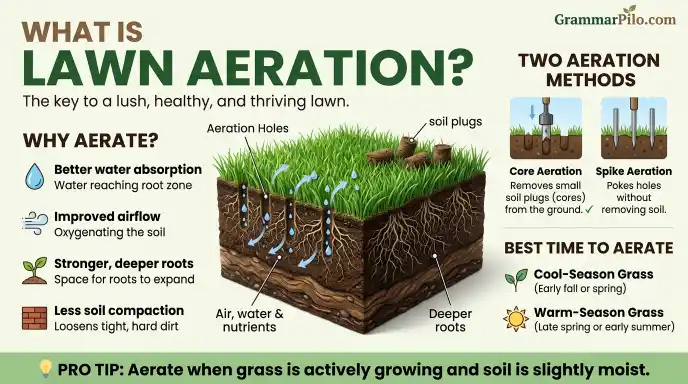
Lawn aeration is a process that creates small openings in the soil to reduce compaction and improve conditions for grass roots.
Over time, soil can become compressed by foot traffic, lawn equipment, vehicles, and natural settling. Compacted soil contains less space for air and water, making it harder for roots to grow.
Aeration helps address this problem by creating pathways through the soil.
Why Is Aeration Important?
Healthy grass needs oxygen, water, and nutrients around its roots. When soil becomes compacted, these essential resources may not move through the ground efficiently.
Aeration can help:
- Improve water infiltration.
- Increase oxygen movement through the soil.
- Encourage deeper root development.
- Reduce problems associated with compacted ground.
- Improve the effectiveness of fertilization and watering.
- Support healthier grass growth.
Aeration does not directly remove the thatch layer. Its primary purpose is to improve the physical condition of the soil.
How Does Aeration Work?
Different aeration methods are available, but two are especially common.
Core Aeration
Core aeration uses hollow metal tines to remove small plugs of soil from the lawn. These soil cores are left on the surface, where they gradually break down.
Core aeration is generally the preferred method for lawns with significant soil compaction because it physically removes small amounts of soil.
Spike Aeration
Spike aeration uses solid spikes to create holes in the ground without removing soil.
Although it can provide some temporary openings, pushing solid spikes into compacted soil may increase pressure around the holes. For this reason, core aeration is often more effective for addressing serious compaction.
When Should You Aerate?
The best time to aerate depends on the grass type and its growing season.
- Cool season grasses: Usually benefit from aeration in early fall or spring.
- Warm season grasses: Are generally aerated in late spring or early summer during active growth.
Aerating when grass is actively growing gives it a better opportunity to recover.
The soil should be moist enough for the equipment to penetrate, but not so wet that the machine damages the lawn.
Dethatching vs. Aerating: Main Differences
Although both treatments improve lawn conditions, they work in different ways.
| Feature | Dethatching | Aerating |
| Main purpose | Remove excessive thatch | Reduce soil compaction |
| Target area | Above the soil surface | Inside the soil |
| Main problem | Organic material buildup | Compressed soil |
| Common equipment | Dethatching rake or power dethatcher | Core or spike aerator |
| Removes soil plugs | No | Yes, with core aeration |
| Improves water movement | Can help if thatch blocks water | Directly improves soil infiltration |
| Helps root growth | Indirectly, when thatch is excessive | Yes, by improving soil conditions |
| Best time | During active grass growth | During active grass growth |
| Lawn appearance afterward | May look rough or thin | Small soil plugs may appear on the surface |
Which Treatment Is More Effective?
Neither treatment is universally better. Their effectiveness depends on the condition of your lawn.
Dethatching is more useful when excessive organic material prevents water and nutrients from reaching the soil.
Aeration is more useful when compacted ground restricts root growth and water penetration.
If your lawn has both problems, you may benefit from both treatments. However, avoid performing aggressive treatments without considering grass health, weather, and recovery time.
Signs Your Lawn Needs Dethatching
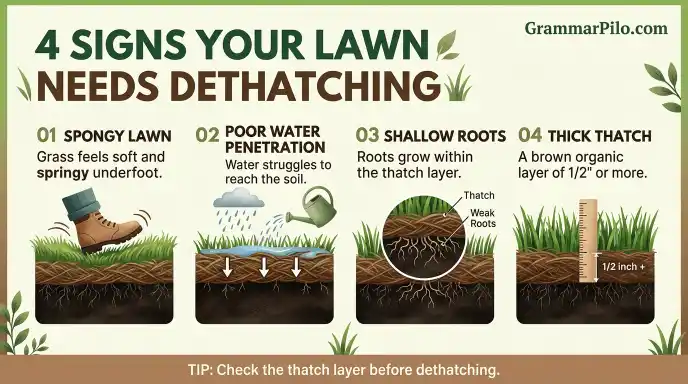
Before choosing aerating or dethatching, inspect the lawn to identify the underlying problem.
A lawn with excessive thatch often has several noticeable symptoms.
1. The Lawn Feels Spongy
Walk across your grass and pay attention to how the surface feels.
If the lawn feels unusually soft or springy under your feet, excessive thatch may be present. However, softness alone does not confirm a thatch problem.
2. Water Has Difficulty Reaching the Soil
A thick thatch layer can interfere with water penetration, especially when it becomes dense and dry.
If water remains near the grass surface or runs away instead of reaching the soil, inspect the thatch layer and check for other drainage problems.
3. Grass Roots Grow Within the Thatch
Excessive thatch can encourage shallow root development because roots may grow within the organic layer instead of extending into the soil.
This can make grass more vulnerable to heat and drought.
4. You Can See a Thick Organic Layer
The most reliable way to identify excessive thatch is to inspect a small section of your lawn.
Cut a small wedge of grass and soil with a spade. Look for a brown, spongy layer between the green grass and the actual soil.
A thatch layer around half an inch or more may indicate that dethatching is worth considering, although grass type and lawn conditions also matter.
Signs Your Lawn Needs Aeration
Compacted soil creates a different set of problems. Look for these common warning signs.
1. The Soil Feels Hard
If the ground is difficult to penetrate with a screwdriver or garden tool, compaction may be limiting healthy root growth.
A simple screwdriver test can help identify areas that need closer inspection.
2. Water Runs Off Quickly
Compacted soil often absorbs water slowly.
If irrigation or rainfall creates puddles or flows away instead of soaking into the ground, aeration may help. However, poor drainage can also result from clay heavy soil, grading issues, or an unsuitable drainage system.
3. Grass Looks Thin or Weak
Grass growing in compacted soil may struggle to develop strong roots.
You might notice bare patches, weak growth, or grass that becomes stressed more easily during hot weather.
4. The Lawn Receives Heavy Foot Traffic
Lawns used frequently by children, pets, visitors, or outdoor activities can develop compacted areas.
Paths, play areas, and frequently used sections may need aeration more often than less used parts of the yard.
Can You Dethatch and Aerate at the Same Time?
Yes, you can perform both treatments during the same general lawn care period, but the decision should depend on the severity of each problem and the condition of the grass.
If a lawn has excessive thatch and compacted soil, both dethatching and aeration may be beneficial.
However, performing both treatments aggressively at once can place considerable stress on the grass.
Recommended Treatment Order
When both treatments are necessary, a practical approach is:
- Inspect the lawn to confirm excessive thatch and soil compaction.
- Dethatch first if the organic layer is thick enough to interfere with lawn maintenance.
- Remove loose debris from the surface.
- Aerate the soil if compaction is also present.
- Water appropriately and allow the grass to recover.
The treatments do not always need to happen on the same day. If the lawn is already stressed, consider spacing them out and allowing recovery before performing another disruptive treatment.
Should You Aerate Before Dethatching?
There is no universal rule that aeration must always come before or after dethatching.
The appropriate order depends on the lawn’s condition, equipment, and treatment plan. When excessive thatch is the primary issue, removing it first can make subsequent lawn care easier.
When compaction is the main concern and thatch is not excessive, aeration alone may be sufficient.
Best Time of Year for Aerating and Dethatching
Timing matters because both treatments disturb the lawn.
Grass generally recovers best when it is actively growing and has favorable temperatures, adequate moisture, and enough time to establish healthy growth.
| Grass Type | Dethatching | Aerating |
| Kentucky bluegrass | Early fall or spring | Early fall or spring |
| Perennial ryegrass | Early fall or spring | Early fall or spring |
| Tall fescue | Early fall or spring | Early fall or spring |
| Bermudagrass | Late spring or early summer | Late spring or early summer |
| Zoysiagrass | Late spring or early summer | Late spring or early summer |
| St. Augustinegrass | During active growth, if needed | During active growth |
These are general seasonal guidelines, not fixed calendar dates. Local temperatures and growing conditions should determine the actual treatment window.
For lawns in climates with different seasonal patterns, use the grass’s active growth period rather than following a northern or southern US calendar automatically.
Dethatching or Aerating: Which Is Better for Your Lawn?
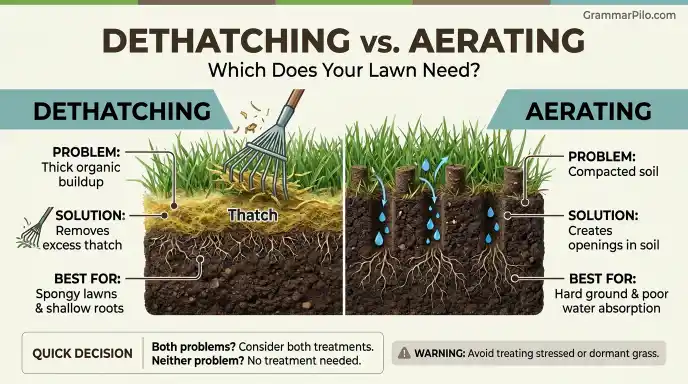
Choosing the right treatment becomes easier when you identify the main problem.
Choose Dethatching for Excessive Organic Buildup
Dethatching is the better choice when the layer between the grass and soil has become too thick.
It can help restore better contact between the grass roots and the soil while removing accumulated organic material.
However, a thin thatch layer is normal and does not need to be removed. Aggressive dethatching can damage healthy grass.
Choose Aeration for Compacted Soil
Aeration is the better choice when the ground is hard and compacted.
Core aeration removes small plugs of soil, creating openings that improve the movement of water and air.
It is particularly useful for lawns exposed to heavy foot traffic or growing in compacted clay soil.
Choose Both for Multiple Lawn Problems
Some lawns have excessive thatch and compacted soil at the same time.
In these cases, both treatments may be appropriate. The important thing is to confirm that each problem exists rather than assuming every unhealthy lawn needs both procedures.
What If Your Lawn Has Neither Problem?
Do not dethatch or aerate automatically just because these treatments are popular.
If your grass is healthy, the soil absorbs water properly, and the thatch layer is thin, routine mowing, suitable watering, and appropriate fertilization may be all your lawn needs.
Common Lawn Care Mistakes to Avoid
Even when you understand aerating vs. dethatching, incorrect lawn care practices can reduce the benefits of both treatments.
Mistake 1: Dethatching Every Year Without Checking the Lawn
Dethatching is not an annual requirement for every lawn.
Some grass varieties naturally produce more thatch than others. Inspect the lawn first and remove thatch only when the layer becomes excessive.
Mistake 2: Using Spike Aeration for Severe Compaction
Spike aerators create holes, but they do not remove soil.
In heavily compacted ground, they may push soil sideways and increase pressure around the openings. Core aeration is generally a better choice for serious compaction problems.
Mistake 3: Treating Dormant or Stressed Grass
Dethatching and aerating can both disturb grass.
Avoid aggressive treatments during drought, extreme heat, freezing conditions, or dormancy. Grass needs suitable growing conditions to recover.
Mistake 4: Confusing Thatch With Grass Clippings
Grass clippings left after mowing are not the same as thatch.
Small clippings usually decompose quickly and return nutrients to the soil. Removing them every time you mow is not necessary when mowing practices are appropriate.
Mistake 5: Ignoring the Cause of Poor Drainage
Not every water problem is caused by thatch or compaction.
Poor grading, heavy clay soil, drainage issues, and excessive irrigation can also cause standing water. Identify the cause before choosing a treatment.
Google Trends and Modern Usage: Dethatching vs. Aerating
Dethatching and aerating are established terms in lawn care, landscaping, and gardening. Both are commonly used when homeowners research ways to improve grass health and maintain outdoor spaces.
The search phrase dethatch or aerate reflects a practical question. People want to know which treatment their lawn needs before purchasing equipment or hiring a lawn care professional.
Search interest may change with seasonal lawn maintenance, local weather, and grass growing conditions. In regions with cool season grasses, homeowners often research lawn renovation during spring and fall. Warm season grass maintenance generally follows warmer growing periods.
The two terms also appear in different types of lawn care discussions.
- Dethatching is commonly associated with removing excessive organic buildup and improving the lawn surface.
- Aerating is associated with relieving soil compaction and improving conditions for grass roots.
- Dethatching and aerating often appear together in lawn renovation guides because some lawns need both treatments.
Google Trends can help compare regional interest in these terms, but search popularity should not be treated as proof that one treatment is more effective than the other.
The right choice depends on the physical condition of the lawn, not simply on which term receives more searches.
Dethatching vs. Aerating: Comparison at a Glance
| Comparison Point | Dethatching | Aerating |
| Definition | Removing excessive thatch | Creating openings in soil |
| Main target | Organic layer above soil | Compacted soil |
| Primary benefit | Reduces excessive thatch buildup | Improves soil conditions |
| Equipment | Dethatching rake or machine | Core or spike aerator |
| Removes organic material | Yes | No |
| Removes soil | No | Yes, with core aeration |
| Helps water penetration | When thatch is obstructive | Yes, when compaction limits infiltration |
| Best for | Thick thatch | Hard, compacted ground |
| Recovery required | Yes, especially after aggressive treatment | Yes, although disturbance is usually less severe |
| Required for every lawn | No | No |
Frequently Asked Questions
1. Is dethatching the same as aerating?
No, dethatching and aerating are different lawn care treatments. Dethatching removes excessive organic material from the surface of the soil, while aerating creates openings in the ground to relieve compaction and improve air and water movement.
2. Should I dethatch or aerate first?
The order depends on the condition of your lawn. If excessive thatch is the main problem, dethatching may be the logical first step. If the soil is compacted but the thatch layer is healthy, aeration alone may be enough.
3. Does aeration remove thatch?
No, aeration does not directly remove the thatch layer. Core aeration removes small plugs of soil, but it does not replace dethatching when excessive organic material has accumulated above the soil.
4. Does dethatching help with compacted soil?
Dethatching does not directly relieve soil compaction. It removes excessive organic material from the lawn surface, while aeration addresses compacted soil by creating openings through which air and water can move.
5. Is core aeration better than spike aeration?
Core aeration is generally more effective for lawns with significant soil compaction because it removes small soil plugs. Spike aeration creates holes without removing soil and may increase pressure around the holes in heavily compacted ground.
6. How often should you dethatch your lawn?
There is no universal annual schedule for dethatching. Inspect your lawn and consider treatment when the thatch layer becomes excessive, often around half an inch or more. Grass variety, soil conditions, and lawn health also influence the decision.
7. How often should you aerate your lawn?
Aeration frequency depends on soil type, grass variety, and foot traffic. Lawns with heavy clay soil or frequent use may benefit from more regular aeration, while healthy lawns with loose soil may need it less often.
8. Can dethatching damage grass?
Yes, aggressive dethatching can damage healthy grass, particularly when performed during dormancy, drought, or extreme heat. Use the right equipment and treat the lawn when the grass is actively growing and able to recover.
9. Should I mow before dethatching or aerating?
Mowing before either treatment can make lawn maintenance easier. For dethatching, mowing to a suitable height can help the equipment reach the thatch layer. Before aeration, mowing slightly shorter may also make the lawn easier to work on, but avoid cutting grass excessively short.
10. Can I fertilize after dethatching and aerating?
Yes, fertilization may be appropriate after these treatments if your lawn needs additional nutrients.
However, choose fertilizer according to grass type, soil conditions, and the season. Aeration can also create an opportunity for soil amendments, such as compost, to reach the ground more effectively.
Conclusion: Choose the Treatment That Matches Your Lawn’s Needs
Choosing between dethatching or aerating becomes simple once you understand the difference between excessive thatch and compacted soil.
Dethatching removes accumulated organic material from the lawn surface, while aerating creates openings in the soil to improve water movement, oxygen availability, and root development.
If your lawn feels spongy and has a thick layer of thatch, dethatching may be the right solution. If the ground is hard, water struggles to penetrate, or grass roots have difficulty growing, aeration is generally more appropriate. Some lawns need both treatments, but others may not need either.
Before renting equipment or scheduling professional lawn care, inspect your grass and soil to identify the actual problem. Choose a treatment during the grass’s active growing period and avoid unnecessary disturbance.
With the right approach, you can improve lawn conditions, support stronger roots, and maintain healthier grass throughout the growing season.
Explore More Articles

I’m Sloane Mercer, a U.S.-based English language writer focused on grammar, spelling, vocabulary, and everyday English usage. Through GrammarPilo, I provide clear and practical explanations to help readers choose the right words and communicate with confidence.